
 Vancodermadmin
The Relationship Between Systemic Diseases and Hair Disorders
 Faramarz Rafie MD / Vancoderm Academy & College [VDA] / Vancoderm Clinic [VDCMed]
Although commonly viewed through a cosmetic lens, the condition of the hair is a powerful clinical marker of overall systemic health. Many internal disorders, including endocrine, nutritional, and autoimmune diseases, manifest early through changes in hair shedding, texture, or density. Understanding these patterns allows clinicians to uncover hidden systemic issues and optimize patient care.
How Systemic Diseases Affect Hair
Hair follicles are highly active, rapidly dividing structures that rely on proper hormonal balance, nutritional status, immune regulation, and vascular supply. When systemic health is disrupted, these follicles often respond with visible and measurable changes such as shedding, thinning, breakage, or altered hair cycle patterns.
 Hair Follicles: Highly Active, Rapidly Dividing Structures
Hair follicles are dynamic micro-organs within the skin that are responsible for producing hair. Their continuous activity and rapid cellular turnover make them highly sensitive to changes in systemic health. Interestingly, hair follicles can continue limited activity for a short period after death. While the body is no longer alive, the cells in the hair matrix may remain metabolically active for several hours, allowing some hair shafts to appear longer as the surrounding skin and tissues dehydrate and retract. However, follicles do not truly multiply or produce new hair after death; the apparent “postmortem hair growth” is primarily due to skin changes rather than actual cell division.
Rapid Cellular Division
- Matrix cells in the hair bulb divide faster than many other body cells, with division rates comparable to the intestinal epithelium.
- This rapid proliferation is necessary to produce hair that grows approximately 1–1.5 cm per month on average.
- Because these cells divide so quickly, they are extremely sensitive to systemic disruptions like:
- Nutritional deficiencies (iron, protein, vitamins)
- Hormonal imbalances (thyroid, androgen excess)
- Medications and toxins
- Inflammatory cytokines from systemic disease
Hair Growth Cycle
Hair follicles cycle through three main phases, each reflecting the activity of these dividing cells:
- Anagen (Growth Phase): Matrix cells actively divide to form the hair shaft. Duration: 2–6 years (scalp).
- Catagen (Regression Phase): Follicle activity slows; cells stop dividing, and the lower follicle shrinks.
- Telogen (Resting Phase): Minimal activity; old hair sheds and the follicle prepares for a new cycle.
Sensitivity to Systemic Health
- Because hair follicle cells are highly proliferative, any systemic stress (illness, malnutrition, hormonal changes) can immediately impact hair growth.
- The follicle’s rapid turnover means changes in the body often manifest as hair shedding or texture alteration within weeks to months.
Here are the major categories of systemic conditions associated with hair disorders:
Endocrine Disorders
Endocrine disorders can significantly influence hair and scalp health by disrupting hormonal balance, which is critical for normal follicular function and hair growth. Conditions such as thyroid dysfunction, polycystic ovary syndrome (PCOS), Cushing’s syndrome, and diabetes can lead to alterations in the hair cycle, causing diffuse thinning, excessive shedding, or localized hair loss. Hypothyroidism often results in dry, coarse hair and scalp dryness, whereas hyperthyroidism can cause fine, brittle hair with increased shedding. Androgen-related disorders, such as PCOS, may produce follicular miniaturization and patterned hair loss, particularly on the scalp. Additionally, imbalances in cortisol, insulin, or other systemic hormones can exacerbate scalp inflammation, alter sebum production, and impair follicular regeneration. Collectively, endocrine disorders compromise hair density, strength, and scalp integrity, highlighting the intricate connection between hormonal health and hair physiology.
Thyroid Dysfunction (Hypothyroidism & Hyperthyroidism)
- Causes diffuse scalp hair thinning
- Leads to dry, brittle hair
- Can induce telogen effluvium due to metabolic imbalance
Polycystic Ovary Syndrome (PCOS)
- Increases androgen levels → female-pattern hair thinning
- Causes hirsutism in androgen-sensitive areas
- Can trigger acne and seborrhea alongside hair loss
Adrenal Disorders (Cushing’s, Addison’s)
- Cushing’s: thinning of scalp hair
- Addison’s: loss of body hair due to low cortisol/androgen production
Autoimmune Diseases
Autoimmune disorders can profoundly affect hair and scalp health by causing the immune system to mistakenly attack hair follicles and surrounding scalp tissue. Conditions such as alopecia areata, lupus erythematosus, and lichen planopilaris can lead to patchy or diffuse hair loss, follicular miniaturization, and permanent scarring in severe cases. Chronic inflammation associated with autoimmune activity can result in scalp redness, scaling, tenderness, and discomfort, while disruption of the normal hair growth cycle often leads to prolonged shedding and delayed regrowth. In some disorders, systemic effects—such as hormonal imbalances, nutrient malabsorption, or medication side effects—may further exacerbate hair thinning and fragility. Overall, autoimmune conditions compromise follicular integrity and scalp health, producing hair loss patterns that vary in severity depending on the specific disease and its management.
Alopecia Areata (AA)
- An autoimmune attack on hair follicles
- Causes patchy hair loss, sometimes progressing to total scalp (AT) or body loss (AU)
Systemic Lupus Erythematosus (SLE)
- Non-scarring telogen effluvium during flares
- Discoid lupus: scarring alopecia with permanent follicular destruction
Rheumatoid Arthritis & Other Autoimmune Conditions
- Medications (methotrexate, biologics) may contribute to shedding
- Chronic inflammation can push follicles into telogen
Nutritional and Metabolic Disorders
Nutritional and metabolic disorders exert a profound impact on hair and scalp health by disrupting follicular function, hair growth cycles, and scalp integrity. Deficiencies in essential nutrients—including proteins, vitamins (biotin, A, D, B-complex), and minerals (iron, zinc, selenium)—can result in diffuse hair thinning, increased shedding, brittle or depigmented hair, and scalp dryness or scaling. Concurrently, metabolic conditions such as diabetes, thyroid dysfunction, and obesity impair hormonal balance, microvascular circulation, and follicular nourishment, leading to slowed hair regrowth, follicular miniaturization, and heightened susceptibility to scalp inflammation or infections. Chronic systemic inflammation and oxidative stress associated with these disorders further exacerbate hair fragility and compromise scalp resilience. Collectively, these factors underscore the integral role of optimal nutrition and metabolic regulation in maintaining hair density, strength, and overall scalp health.
Iron-deficiency Anemia
- A leading cause of telogen effluvium
- Hair becomes thin, weak, and sheds easily
Vitamin Deficiencies
- B12, D, and folate: impaired hair cycle
- Biotin deficiency (rare): brittle, thinning hair
Vitamin deficiencies can significantly affect hair and scalp health by disrupting follicular function, keratin synthesis, and scalp integrity. Deficiencies in key nutrients such as biotin, iron, zinc, vitamin D, and B vitamins may lead to diffuse hair thinning, increased shedding, and slower hair growth, while hair shafts can become brittle, fragile, or depigmented. In addition, both deficiency and excess of vitamin A can impact the scalp: insufficient levels may impair hair growth, whereas excessive vitamin A intake has been associated with the development or worsening of seborrheic dermatitis. Iron deficiency, in particular, is linked to telogen effluvium, and low vitamin D can disrupt the hair growth cycle and follicular regeneration. Zinc and B-vitamin deficiencies may exacerbate scalp inflammation or scaling. Collectively, these nutritional imbalances compromise hair density, strength, and scalp health, underscoring the critical role of balanced vitamin intake in maintaining healthy hair.
Protein-energy Malnutrition
- Causes diffuse thinning
- Alters hair shaft structure
Metabolic disorders (diabetes, chronic kidney disease, liver disease)
- Impair nutrient delivery to follicles
- Lead to dull, fragile hair and increased shedding
Diabetes
Diabetes can significantly affect the hair and scalp due to chronic high blood sugar, which damages small blood vessels and reduces blood circulation to the hair follicles. With limited oxygen and nutrient supply, the follicles weaken, leading to hair thinning, slower regrowth, and an overall decline in scalp health. Diabetes also disrupts the normal hair growth cycle, causing more follicles to enter the resting (telogen) phase, which results in increased shedding and delayed regrowth. Hormonal imbalances associated with insulin resistance may contribute to diffuse thinning and follicular miniaturization, while chronic inflammation can cause scalp sensitivity, redness, and flare-ups of conditions like seborrheic dermatitis. Additionally, individuals with diabetes are more prone to bacterial and fungal scalp infections due to a weakened immune response and higher glucose levels, which can cause patchy hair loss or folliculitis. Overall, the combined effects of poor circulation, inflammation, hormonal changes, and infection risk make diabetes a significant contributor to hair and scalp problems.
Chronic Illness & Systemic Inflammation
Inflammatory cytokines affect hair cycling.
Common conditions include:
- Chronic infections
- Malignancies
- Inflammatory bowel disease
These frequently trigger telogen effluvium, especially after illness or stress.
Medications and Treatments
Many systemic medications can cause hair changes:
- Chemotherapy → anagen effluvium
- Beta-blockers → telogen effluvium
- Anticoagulants (heparin) → excessive shedding
- Retinoids → dryness and thinning
- Antidepressants and anticonvulsants → hair cycle disruption
Understanding medication history is essential for accurate diagnosis.
Hormonal and Life-Stage Factors
Even normal physiological states can mimic systemic disease:
Postpartum (Telogen Effluvium)
Postpartum women commonly experience noticeable changes in their hair and scalp due to the sudden drop in estrogen levels after childbirth. During pregnancy, elevated estrogen keeps hair in the growth (anagen) phase longer, resulting in thicker, fuller hair. After delivery, hormone levels rapidly normalize, causing a large number of follicles to shift into the resting (telogen) phase at the same time, which leads to increased shedding known as postpartum telogen effluvium. This shedding can be diffuse and dramatic, though it is temporary and usually resolves within several months. Some women may also notice drier or more fragile hair, increased breakage, or mild scalp sensitivity as the follicles adjust to the hormonal shift. Stress, sleep deprivation, and nutritional deficiencies—common in the postpartum period—can further influence hair quality and prolong the shedding phase. Overall, postpartum hair changes reflect a natural hormonal reset and typically improve as the body restores balance.
Menopause
Menopause can significantly influence hair and scalp health due to the decline in estrogen and progesterone—hormones that help maintain strong, healthy hair follicles. As these hormone levels drop, the relative increase in androgens can cause follicles to gradually shrink, leading to diffuse thinning, reduced volume, and a slower rate of hair growth. Many women also notice that their hair becomes drier, more brittle, and less resilient because the scalp produces less natural oil. Changes in circulation and the length of the hair growth cycle may prolong the resting phase, resulting in increased shedding. In addition, hormonal fluctuations can cause the scalp to feel drier, more sensitive, or prone to mild inflammatory conditions such as seborrheic dermatitis. Altogether, menopause contributes to progressive hair thinning, breakage, and altered scalp comfort, reflecting the combined effects of hormonal imbalance, aging, and reduced follicular activity.
Aging
Aging exerts a multifactorial impact on hair and scalp health, primarily through gradual hormonal changes, diminished follicular activity, and reduced scalp vascularization. Hair follicles progressively miniaturize, resulting in thinner, finer hair and decreased overall density. Concurrently, sebaceous gland activity declines, leading to a drier, less resilient scalp and increased hair fragility. The gradual loss of melanocytes contributes to graying, while structural changes in the dermis reduce elasticity and nutrient delivery to follicles, further compromising hair quality. Additionally, the prolongation of the resting (telogen) phase can exacerbate shedding, and age-related scalp alterations may increase susceptibility to dryness, irritation, and mild inflammatory conditions. Collectively, these changes culminate in weaker, sparser hair and diminished scalp vitality, reflecting the natural physiological effects of aging.
Clinical Clues on Examination and Trichoscopy
- Diffuse loss → TE from systemic stress
- Miniaturization → androgen-related conditions
- Exclamation mark hairs → alopecia areata
- Broken hairs → nutritional deficiencies or thyroid disease
- Loss of follicular openings → scarring autoimmune disease
Diagnosis: A Combined Approach
A thorough workup should include:
- CBC (anemia)
- Ferritin/iron studies
- Thyroid panel
- Vitamin B12, D, zinc
- Hormonal testing (androgens, LH/FSH when indicated)
- Autoimmune screening (ANA, ESR)
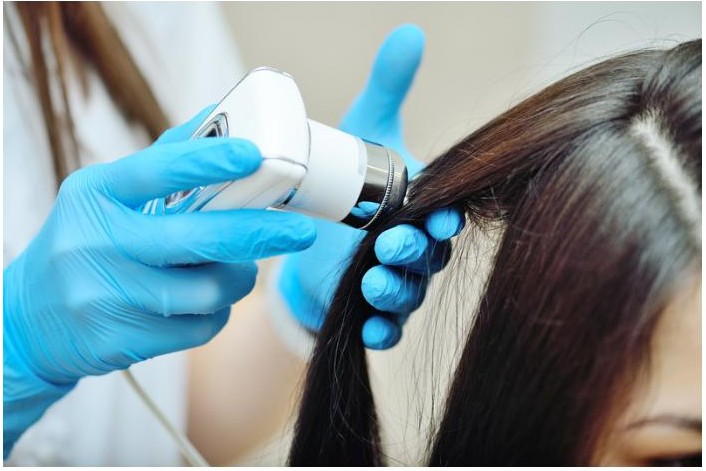
Trichoscopy often helps differentiate between systemic vs. primary hair disorders.
Management Principles
Treatment depends on the underlying systemic disorder:
- Correct nutritional deficiencies
- Treat endocrine dysfunction
- Address autoimmune activity
- Modify or adjust medications if possible
- Stabilize chronic illness
- Use supportive hair treatments (minoxidil, PRP, low-level laser, anti-inflammatory topicals)
The most successful outcomes occur when the internal cause is identified and managed promptly. Many additional systemic conditions may influence hair and scalp health, and I look forward to exploring them in a future discussion.
 We would like to thank our readers and acknowledge #VANCODERM ACADEMY AND COLLEGE, a leading professional education institute in the field of #Medical_Aesthetics and Wellness. Students enrolled in the Clinical Practitioner Specialist Diploma in Medical Aesthetics gain in-depth knowledge of #Trichology, including scalp disorders, hair conditions, and hair care management. Stay connected with us on Instagram, LinkedIn, Facebook, and our other social media platforms for more updates and insights.