
 Vancodermadmin
SCALP DYSTHESIA
 Faramarz Rafie MD / VANCODERM ACADEMY & COLLEGE (VDA) / VANCODERM CLINIC (VDCMED)
Scalp dysesthesia is an increasingly recognized condition in dermatology and trichology, notable for its complex interplay between neurological, musculoskeletal, and psychogenic factors. Although patients present with significant discomfort—often describing burning, pruritus, tightness, or abnormal sensations—the scalp typically appears clinically normal, making the condition difficult to diagnose and frequently misunderstood. As modern lifestyles contribute to heightened cervical spine strain, chronic stress, and prolonged digital device use, clinicians are encountering scalp dysesthesia more often in practice. Understanding its multifactorial pathophysiology is essential for accurate assessment and effective management.
Definition:
Scalp dysesthesia is defined as a chronic or episodic neuropathic sensory disturbance of the scalp occurring without primary dermatologic lesions. Symptoms may include burning, stinging, itching, tingling, or exaggerated sensitivity to touch and hair movement.
Pathophysiology:
The pathophysiology of scalp dysesthesia is multifactorial and reflects a complex interaction between the peripheral nervous system, central neural processing, musculoskeletal structures of the cervical spine, and psychophysiological influences. At the core of the condition is aberrant sensory nerve signaling, particularly involving the small unmyelinated C-fibers and thinly myelinated A-delta fibers responsible for transmitting pain, itch, and temperature sensations. Chronic irritation or compression of the cervical spinal nerves—often resulting from cervical spondylosis, disc protrusions, facet joint degeneration, or prolonged forward-head posture—can induce peripheral sensitization. This increases spontaneous nerve firing and lowers the threshold for nociceptive activation, allowing non-painful stimuli such as light touch, hair movement, or mild temperature changes to be perceived as painful or irritating (allodynia).
Musculoskeletal factors further contribute to this altered neuronal environment. Sustained tension or hypertonicity in the trapezius, splenius capitis, occipitalis, and paraspinal muscles may mechanically irritate peripheral nerves or generate trigger points that refer atypical sensations to the scalp. This mechanism is particularly evident in patients who spend long periods at computers or mobile devices, where repetitive strain and reduced neck mobility lead to chronic muscular imbalance. Additionally, impairment in local microcirculation caused by muscle tightness may reduce the delivery of oxygen and nutrients to superficial nerves, promoting neurogenic inflammation and dysesthetic symptoms.
Central sensitization plays a significant role in more persistent or severe cases. Prolonged peripheral stimulation can heighten excitability within the dorsal horn of the spinal cord and central pain pathways. This process amplifies sensory input from the scalp and can perpetuate symptoms even after the original peripheral trigger has been removed. Functional neuroimaging studies suggest that chronic stress, anxiety, and dysregulation of the hypothalamic–pituitary–adrenal (HPA) axis may further enhance central neural responsiveness, contributing to somatosensory amplification. Patients with high stress or underlying anxiety disorders demonstrate increased cortical attention to bodily sensations, which may intensify the perception of burning or itching despite minimal peripheral pathology.
Although the scalp often appears clinically normal, subtle changes may occur at the microscopic level. Repetitive scratching or rubbing can disrupt the stratum corneum, increasing trans-epidermal water loss and triggering low-grade inflammation. Release of neuropeptides such as substance P and calcitonin gene-related peptide (CGRP) may enhance vasodilation, mast cell activation, and local inflammatory responses—further sensitizing cutaneous nerves in a cycle termed “neurogenic inflammation.” However, these changes often remain subclinical and are not visible on routine examination.
Overall, scalp dysesthesia represents a convergence of neuropathic dysfunction, cervical and muscular mechanical factors, and dysregulated central sensory processing, with psychological stress acting as a significant modulator of symptom severity. A comprehensive understanding of these interconnected mechanisms is essential for selecting appropriate therapeutic strategies and achieving long-term symptom control.
Etiology
The etiology of scalp dysesthesia is complex, involving multiple interacting factors that contribute to abnormal sensory perception.
Neurological causes are prominent, with peripheral nerve irritation or dysfunction arising from cervical spine pathology (such as spondylosis, disc herniation, or foraminal narrowing) and prior trauma to the scalp or neck region. These conditions can alter nerve conduction and increase susceptibility to neuropathic pain. Musculoskeletal contributors include chronic tension or hypertonicity in the occipital, cervical, and upper trapezius muscles, as well as postural imbalances that create repeated micro-compression or stretch of scalp-innervating nerves.
Dermatologic factors play a critical role in initiating or perpetuating symptoms. Conditions such as seborrheic dermatitis, psoriasis, chronic eczematous dermatitis, folliculitis, and lichen planopilaris can subtly disrupt the scalp barrier or trigger inflammatory pathways, even in subclinical forms that appear normal on examination.
Hair-related mechanical stressors—including traction from tight hairstyles, hair extensions, braiding, chemical relaxers, and frequent heat styling—can induce localized nerve irritation or contribute to microtrauma of hair follicles and surrounding tissue, which may exacerbate neuropathic sensations.
Systemic and metabolic factors also influence susceptibility to scalp dysesthesia. Nutritional deficiencies (notably iron, zinc, vitamin B12, and folate) may impair nerve function, while endocrine disorders such as thyroid dysfunction can alter skin sensitivity and neural conduction. Certain medications, particularly those affecting the nervous system, may induce neuropathic symptoms in the scalp.
Psychogenic and environmental contributors are increasingly recognized. Chronic stress, anxiety, sleep deprivation, and heightened somatosensory awareness can amplify neural sensitivity, making normal sensory stimuli painful or irritating. Environmental exposures, such as prolonged use of headgear, helmets, or tight caps, may act as triggers in predisposed individuals.
Collectively, scalp dysesthesia arises from a synergistic effect of neural, muscular, dermatologic, systemic, and psychological factors, which vary in relative contribution among patients. This multifactorial etiology underscores the necessity for a comprehensive, individualized evaluation to identify all potential contributors and guide effective treatment strategies.
 Signs and Symptoms
Scalp dysesthesia is primarily a sensory disorder, and its hallmark is the presence of abnormal or unpleasant sensations on the scalp in the absence of visible skin changes. Patients commonly report burning, stinging, tingling, prickling, or crawling sensations that may be intermittent or continuous. These symptoms are often aggravated by light touch, hair manipulation, brushing, washing, or even mild pressure from hats or headgear. Many patients describe scalp tightness or a “band-like” sensation encircling the head, sometimes accompanied by pain radiating to the neck, occiput, or shoulders. Pruritus is frequent, though scratching typically provides only transient relief and may lead to secondary excoriations or mild lichenification over time.
Additional features may include hyperesthesia (increased sensitivity to stimuli), allodynia (pain triggered by normally non-painful stimuli), and intermittent numbness or paresthesia. Some patients report symptom fluctuation based on stress levels, fatigue, or environmental triggers such as heat, humidity, or pressure. Psychological manifestations, including anxiety, irritability, sleep disturbances, or heightened attentiveness to scalp sensations, are common, particularly in chronic cases. Unlike inflammatory or infectious scalp disorders, visible signs such as erythema, scaling, or pustules are typically absent, which often delays diagnosis and may contribute to patient distress.
Recognizing this constellation of subjective sensory symptoms without corresponding dermatologic findings is crucial for early identification and appropriate management of scalp dysesthesia.
Trichoscopic Findings
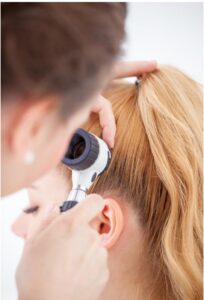
Although scalp dysesthesia is primarily a sensory neuropathic disorder and often presents with a clinically normal scalp, Trichoscopy can provide subtle insights that support assessment and help rule out other scalp conditions. In most cases, Trichoscopy reveals no specific primary abnormalities, consistent with the absence of inflammatory or infectious pathology. However, secondary changes may be observed, particularly in patients with chronic scratching or rubbing. These may include focal erythema, superficial excoriations, broken hairs, perifollicular scaling, or mild hair shaft damage. Follicular openings are generally preserved, and no scarring or alopecia patterns typical of scarring alopecias are present. In some patients, Trichoscopy may reveal peripilar casts or subtle perifollicular hyperkeratosis, especially when low-grade inflammatory conditions such as seborrheic dermatitis coexist or act as triggers.
Trichoscopic examination is also valuable for differential diagnosis, helping to distinguish scalp dysesthesia from other causes of pruritus or burning sensations, including lichen planopilaris, psoriasis, tinea capitis, or early alopecia areata. While Trichoscopy rarely provides a definitive diagnosis of scalp dysesthesia, it allows clinicians to assess the scalp’s structural integrity, identify secondary trauma, and guide appropriate management strategies to minimize further hair and scalp damage.
Diagnosis
The diagnosis of scalp dysesthesia is primarily clinical, relying on a detailed history and careful physical examination, as the scalp often appears normal. Key diagnostic features include chronic or intermittent abnormal sensations—burning, stinging, itching, tingling, tightness, or crawling—occurring in the absence of overt dermatologic lesions. A comprehensive history should evaluate neuropathic, musculoskeletal, dermatologic, and psychogenic contributors, including cervical spine disorders, postural strain, chronic tension in neck and shoulder muscles, hair care practices, stress levels, and systemic factors such as nutritional deficiencies or endocrine dysfunction.
Trichoscopy can provide adjunctive information, revealing subtle secondary changes such as perifollicular scaling, broken hairs, focal erythema, or superficial excoriations due to repeated scratching or rubbing. Laboratory tests and imaging studies are generally reserved for cases where systemic, nutritional, or musculoskeletal etiologies are suspected. These may include thyroid function tests, vitamin B12 and iron levels, or cervical spine MRI to detect nerve compression.
Differential diagnosis is critical to exclude other scalp disorders presenting with pruritus or discomfort, such as seborrheic dermatitis, psoriasis, lichen planopilaris, tinea capitis, early alopecia areata, or chronic eczematous dermatitis. Psychological assessment may be indicated in patients with high stress, anxiety, or somatosensory amplification. Ultimately, scalp dysesthesia is diagnosed through a combination of characteristic sensory symptoms, exclusion of dermatologic pathology, and identification of contributing systemic or environmental factors, allowing for a targeted, individualized treatment approach.
Treatment
The management of scalp dysesthesia requires a multidisciplinary, individualized approach that addresses both the underlying pathophysiology and the symptomatic neuropathic discomfort. Pharmacologic interventions are often central to therapy. Topical agents, including lidocaine or low-potency corticosteroids, may alleviate localized irritation and modulate peripheral nerve activity. Systemic therapy is indicated in moderate to severe cases, with neuropathic pain modulators such as gabapentin or pregabalin, and low-dose tricyclic antidepressants (e.g., amitriptyline) frequently employed to reduce aberrant nerve firing and central sensitization. In selected patients, serotonin-norepinephrine reuptake inhibitors (SNRIs) or other neuromodulatory medications may be considered when comorbid anxiety or chronic pain exacerbates symptoms.
Non-pharmacologic strategies are integral to long-term management. Addressing musculoskeletal contributors through targeted physiotherapy, cervical spine exercises, postural correction, and ergonomic modifications can reduce mechanical nerve irritation and tension-related symptoms. Stress reduction and behavioral interventions—including cognitive-behavioral therapy, mindfulness, relaxation techniques, and adequate sleep hygiene—mitigate central sensory amplification and improve patient resilience to persistent discomfort.
Scalp and hair care optimization is essential to minimize triggering factors. Patients are advised to avoid tight hairstyles, chemical relaxers, excessive heat styling, and harsh hair treatments that may induce traction or irritant-mediated nerve sensitization. In specialized clinical settings, low-level laser therapy (LLLT) or other neuromodulator procedures may provide adjunctive relief by enhancing microcirculation and modulating peripheral nerve activity.
Finally, patient education and reassurance are critical. Explaining the chronic neuropathic nature of the condition, emphasizing the absence of progressive scalp disease, and encouraging avoidance of repetitive scratching or rubbing can prevent secondary trauma and reduce symptom perpetuation. When combined—pharmacologic, physical, behavioral, and scalp care interventions—these strategies provide a comprehensive, evidence-informed framework for improving symptoms, functional outcomes, and quality of life in patients with scalp dysesthesia.
At Vancoderm Academy and College, we take pride in being a leader in medical aesthetics education, offering modern, evidence-based training programs to students and professionals globally, with a strong presence in Canada, particularly British Columbia. We are committed to advancing knowledge, fostering professional excellence, and shaping the next generation of skilled practitioners in the field of medical aesthetics. We sincerely thank our readers for their continued support and invite you to stay connected with us through Instagram, Facebook, and LinkedIn for updates, insights, and educational resources.
Wishing you the very best days ahead as you pursue your professional and personal goals.