 Vancodermadmin
Collagen Fiber Remodeling
 Faramarz Rafie MD / Vancoderm Academy and College (VDA) / Vancoderm Clinic (VDCmed)
Healthy, youthful skin depends on one essential structural protein: collagen. As we age, collagen production gradually declines, resulting in thinner skin, wrinkles, and reduced elasticity. Fortunately, modern aesthetic treatments can stimulate the skin’s natural ability to produce new collagen through a process known as collagen remodeling.
In this week’s blog, we’ll explore what collagen is, how it is produced, the role of fibroblast cells, and the most effective methods used to remodel collagen for healthier, firmer skin.
 What Is Collagen?
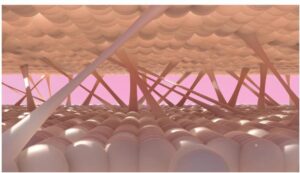
Collagen is the most abundant protein in the human body, accounting for approximately 30% of the body’s total protein. It serves as the primary structural component of the skin, bones, tendons, ligaments, cartilage, and many other connective tissues.
In the skin, collagen provides:
- Strength and structural support
- Firmness and elasticity
- Resistance to stretching and mechanical stress
- A framework for tissue repair and wound healing
There are at least 28 different types of collagen, but Type I collagen is the most abundant in the skin, making up about 80–90% of dermal collagen. Type III collagen is also present and is particularly important during wound healing and in younger skin.
The Structure of Collagen
Collagen has a unique molecular structure that gives it exceptional strength.
Each collagen molecule consists of three polypeptide chains, known as alpha chains, that wrap around one another to form a triple helix. This rope-like arrangement creates remarkable tensile strength while allowing a small degree of flexibility.
The amino acids glycine, proline, and hydroxyproline are especially abundant in collagen. Glycine appears at every third position in the protein sequence, allowing the three chains to pack tightly together.
What Holds the Collagen Chains Together?
The stability of collagen depends on several types of chemical bonds.
Hydrogen bonds form between adjacent alpha chains and help maintain the triple-helix structure.
After collagen is secreted into the extracellular matrix, specialized enzymes create covalent cross-links between neighboring collagen molecules. These cross-links significantly increase the strength and durability of collagen fibers, allowing them to withstand daily mechanical stress.
Together, hydrogen bonding and covalent cross-linking give collagen its unique combination of strength, stability, and flexibility.
Fibroblasts: The Skin’s Collagen-Producing Cells
Fibroblasts are specialized connective tissue cells located within the dermis, the middle layer of the skin. They are the primary cells responsible for producing and maintaining the skin’s extracellular matrix.
Fibroblasts manufacture:
- Type I and Type III collagen
- Elastin
- Hyaluronic acid
- Glycosaminoglycans
- Other structural proteins essential for healthy skin
Fibroblasts also play a critical role in wound healing. When the skin is injured or receives controlled stimulation through aesthetic procedures, fibroblasts become activated and increase the production of new collagen and other matrix components.
Unfortunately, fibroblast activity declines with age. As collagen production slows, existing collagen fibers become fragmented and disorganized, leading to wrinkles, skin laxity, and loss of firmness.
What Is Collagen Remodeling?
Collagen remodeling is the natural biological process through which old or damaged collagen is broken down and replaced with newly synthesized collagen.
Following controlled skin injury or therapeutic stimulation, the body initiates a carefully regulated healing response involving several stages:
- Inflammation
- Fibroblast activation
- New collagen synthesis (neocollagenesis)
- Collagen maturation and reorganization
Over several weeks to months, collagen fibers become thicker, more organized, and stronger, resulting in smoother, firmer, and healthier skin.
Common Methods Used for Collagen Remodeling
Modern aesthetic medicine offers several evidence-based techniques that stimulate fibroblast activity and encourage the production of new collagen, a process known as neocollagenesis. These treatments create controlled thermal or mechanical stimulation within the skin, activating the body’s natural wound-healing response while minimizing damage to surrounding tissues.
Microneedling is one of the most widely used collagen induction therapies. Using fine sterile needles, the device creates thousands of controlled microchannels in the skin. These microscopic injuries stimulate fibroblasts to produce new collagen and elastin while preserving the integrity of the epidermis. As healing occurs, the skin becomes firmer and smoother, with improvements in fine lines, enlarged pores, acne scars, surgical scars, and overall skin texture. Microneedling is suitable for most skin types and is often combined with other regenerative treatments to enhance results.
Radiofrequency (RF) technology stimulates collagen remodeling by delivering controlled electromagnetic energy into the dermis, where it is converted into heat. The thermal effect causes existing collagen fibers to contract immediately while activating fibroblasts to synthesize new collagen and elastin over the following weeks and months. RF treatments are commonly performed for skin tightening, facial rejuvenation, improvement of neck and jawline definition, and reduction of mild to moderate skin laxity, all without significant injury to the skin surface.
Fractional Skin Resurfacing Laser is another highly effective method of stimulating collagen remodeling. Fractional lasers create thousands of microscopic treatment zones while leaving surrounding tissue intact, allowing for faster healing and reduced downtime compared with traditional ablative laser resurfacing. One example is the Frax 1550 nm non-ablative fractional laser available on the Nordlys® platform by Candela. The 1550 nm wavelength penetrates into the dermis, where it creates controlled zones of thermal injury that stimulate fibroblast activity and initiate the natural wound-healing process. As new collagen forms and remodels over several months, patients experience improvements in skin texture, fine lines, acne scars, surgical scars, enlarged pores, photodamage, and overall skin quality. Because the surrounding tissue remains unaffected, healing is relatively rapid while still providing significant collagen stimulation.
High-Intensity Focused Ultrasound (HIFU) stimulates collagen remodeling by delivering focused ultrasound energy to precise depths within the skin and the superficial musculoaponeurotic system (SMAS). The localized thermal coagulation points trigger a wound-healing response without disrupting the epidermis. Fibroblasts respond by producing new collagen and elastin, resulting in gradual lifting, tightening, and improved skin firmness. HIFU is commonly used as a non-surgical treatment for facial lifting, jawline definition, neck tightening, and overall facial rejuvenation.
Platelet-Rich Plasma (PRP) is a regenerative treatment that utilizes concentrated platelets isolated from the patient’s own blood. Platelets contain numerous growth factors, including platelet-derived growth factor (PDGF), transforming growth factor-beta (TGF-β), and vascular endothelial growth factor (VEGF), all of which stimulate fibroblast proliferation, collagen synthesis, angiogenesis, and tissue repair. PRP is frequently combined with microneedling or laser procedures to accelerate healing and enhance collagen remodeling, resulting in healthier, more youthful skin.
Biostimulatory injectable treatments promote collagen remodeling by encouraging the body’s natural collagen production rather than simply replacing lost volume. Unlike traditional dermal fillers that provide immediate correction, biostimulatory injectables activate fibroblasts to synthesize new collagen over several months. The gradual deposition of collagen improves skin firmness, elasticity, and structural support while producing natural-looking, long-lasting rejuvenation. These treatments are commonly used to address age-related volume loss, improve skin quality, and restore facial contours through progressive collagen remodeling.
Mechanism of Collagen Remodeling
Collagen remodeling begins when an external source of energy—such as radiofrequency (RF), fractional laser resurfacing, High-Intensity Focused Ultrasound (HIFU), or the mechanical energy produced by microneedling—is delivered to the dermis. Each technology delivers energy differently, but they all create a controlled injury that initiates the skin’s natural repair process while preserving the surrounding healthy tissue.
Native collagen consists of three polypeptide (α) chains that are stabilized primarily by hydrogen bonds, forming the characteristic triple-helix structure. When sufficient thermal energy is delivered to the dermis (typically between 60°C and 70°C for most collagen-rich tissues), these hydrogen bonds begin to break. As the hydrogen bonds are disrupted, the triple helix partially unwinds, a process known as collagen denaturation. Although the stronger covalent cross-links between collagen molecules are not completely destroyed, the collagen fibers contract immediately because of changes in their molecular structure. This immediate collagen contraction contributes to the early skin-tightening effect often observed after radiofrequency, HIFU, and fractional laser treatments.
The controlled thermal or mechanical injury also activates the body’s wound-healing cascade. Damaged collagen fragments, together with inflammatory mediators, stimulate the release of cytokines and growth factors, including transforming growth factor-beta (TGF-β), platelet-derived growth factor (PDGF), and fibroblast growth factor (FGF). These signaling molecules recruit and activate fibroblasts within the dermis.
Activated fibroblasts begin producing new extracellular matrix components, including hyaluronic acid, elastin, and procollagen, the precursor of collagen. Procollagen is synthesized inside the fibroblast, secreted into the extracellular matrix, and enzymatically converted into tropocollagen. These collagen molecules then self-assemble into collagen fibrils in a highly organized staggered arrangement.
During the remodeling phase, the enzyme lysyl oxidase catalyzes the formation of covalent cross-links between adjacent collagen molecules. These cross-links strengthen and stabilize the newly formed collagen fibrils, producing mature collagen fibers with greater tensile strength and durability.
At the same time, matrix metalloproteinases (MMPs) selectively degrade fragmented, denatured, and aged collagen that was damaged during treatment. This removal of old collagen creates space for the deposition and organization of newly synthesized collagen. Over the following weeks and months, the balance shifts from collagen degradation to collagen synthesis.
Initially, fibroblasts produce predominantly Type III collagen, which serves as the temporary collagen framework during tissue repair. As healing progresses, Type III collagen is gradually replaced by Type I collagen, the strongest and most abundant collagen found in healthy adult skin. The newly formed collagen fibers become thicker, more organized, and aligned along natural lines of tension, resulting in improved dermal density, skin firmness, elasticity, and overall skin quality.
The complete collagen remodeling process generally continues for three to six months after treatment, although this varies with patient age, treatment modality, and individual healing capacity. Understanding how external energy disrupts collagen structure and initiates neocollagenesis is fundamental to the safe and effective use of aesthetic technologies in modern medical aesthetics.
Supporting Natural Collagen Production
Professional collagen remodeling treatments produce the best results when combined with healthy lifestyle habits and an effective skincare routine. Whether you are a skincare professional, a medical aesthetics student, or someone seeking healthier skin, supporting your body’s natural collagen production is essential for maintaining long-term skin health and maximizing the benefits of aesthetic treatments.
A balanced diet rich in lean protein, vitamin C, zinc, and essential amino acids provides the building blocks needed for collagen synthesis. Daily sun protection with a broad-spectrum sunscreen helps prevent ultraviolet (UV) radiation from degrading collagen fibers and elastin, reducing the effects of premature skin aging. Avoiding smoking is equally important, as tobacco smoke increases oxidative stress and activates enzymes that break down collagen within the dermis. Maintaining proper hydration supports healthy skin function, while a consistent skincare regimen containing scientifically supported ingredients—such as retinoids, peptides, antioxidants, and growth factor-based products, when appropriate—can further enhance collagen production and improve overall skin quality.
Combining healthy lifestyle habits with evidence-based treatments, including Microneedling, radiofrequency, fractional laser resurfacing, platelet-rich plasma (PRP), and collagen-stimulating therapies, helps create optimal conditions for long-term skin rejuvenation.
Final Thoughts
Collagen is the structural foundation of youthful, healthy skin. Its highly organized triple-helix structure and strong molecular cross-links provide the strength, resilience, and flexibility that keep the skin firm and functional throughout life. Fibroblasts are the specialized cells responsible for producing and maintaining collagen within the dermis, but their activity naturally declines with age, contributing to wrinkles, skin laxity, and changes in skin texture.