

 Vancodermadmin
GLP-1–Induced Hair Loss: How to Identify, Diagnose, and Manage It
 Faramarz Rafie MD / Vancoderm Academy and College [VDA] / Vancoderm Clinic [VDCMed]
In recent months, we have encountered an increasing number of clients who are using GLP-1 medications for weight loss and subsequently reporting increased hair shedding or hair loss. As this concern becomes more common in our practice, I decided to review the condition more closely to better understand its underlying mechanisms, identify appropriate assessment and treatment approaches, and explore innovative solutions to support our clients experiencing this type of hair loss.
Hair loss has become an increasingly reported concern among patients using GLP-1 receptor agonists for weight management and metabolic health. Medications such as semaglutide and tirzepatide have transformed the treatment of obesity and type 2 diabetes, but some patients notice increased hair shedding during periods of significant weight loss.
For aesthetic and medical professionals, it is important to recognize that this type of hair loss is usually not considered a direct toxic effect of GLP-1 medication on the hair follicle. Instead, it is commonly associated with rapid weight loss, reduced caloric intake, nutritional changes, and physiological stress, which can trigger a condition known as telogen effluvium (TE).
What Is GLP-1–Associated Hair Loss?
GLP-1 receptor agonists can produce substantial weight loss by reducing appetite and food intake and increasing satiety. When weight is lost rapidly, the body may experience a temporary physiological stress response.
Hair follicles are highly metabolically active structures. During significant physiological stress, a greater proportion of follicles can prematurely transition from the anagen (growth) phase into the telogen (resting) phase.
Several weeks to a few months later, these follicles may shed, resulting in noticeable diffuse hair loss.
This pattern is generally consistent with acute telogen effluvium, although other forms of alopecia—particularly androgenetic alopecia—can coexist and should not be overlooked.
Typical Chief Complaint
A patient experiencing GLP-1-associated telogen effluvium may present with complaints such as:
“I am losing much more hair than usual.”
Patients may notice increased hair on their pillow, in the shower, on clothing, or in their hairbrush. Some report that their ponytail feels thinner or that their hair appears less dense.
A typical clinical history should explore:
- When the increased shedding began
- The date GLP-1 therapy was initiated
- The dose and any recent dose increases
- The amount and rate of weight loss
- Changes in appetite and dietary intake
- Recent illness, surgery, psychological stress, or other physiological stressors
- Protein and micronutrient intake
- Previous episodes of hair shedding
- Family history of androgenetic alopecia
- Menstrual or hormonal changes when relevant
- Other medications and medical conditions
The timing is particularly important. Telogen effluvium often becomes clinically apparent approximately 2–3 months after a triggering event, although the exact timeline can vary.
Trichoscopic Findings
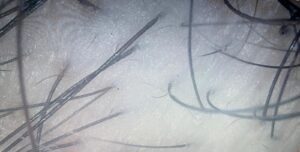
Trichoscopy can be extremely useful when evaluating a patient with increased hair shedding because it allows the practitioner to examine follicular and hair-shaft characteristics without relying solely on visual inspection.
In telogen effluvium, trichoscopy may demonstrate:
- Increased numbers of short regrowing hairs
- Numerous hairs of relatively uniform diameter
- Empty follicular openings without significant perifollicular abnormalities
- Short upright regrowing hairs
- Occasionally, flame-shaped or tapered hairs associated with active shedding
- Increased numbers of yellow dots in some cases, although this is not a defining feature
Importantly, telogen effluvium generally does not produce the marked hair-shaft diameter variability characteristic of androgenetic alopecia.
 Differential Diagnosis: GLP-1–Associated Hair Loss and Female Pattern Hair Loss
When evaluating a client who develops hair loss while using GLP-1 medications, it is important to distinguish GLP-1–associated telogen effluvium (TE) from female pattern hair loss (FPHL), as the two conditions can present differently and may also occur simultaneously. GLP-1–associated hair shedding is commonly associated with significant or rapid weight loss, reduced caloric intake, nutritional changes, and physiological stress. Clients typically report a relatively sudden increase in diffuse hair shedding, often beginning approximately two to three months after a significant weight-loss period or other physiological trigger. The shedding may be noticed in the shower, on clothing, on the pillow, or during brushing. In contrast, FPHL is generally a chronic and progressive condition characterized by gradual reduction in hair density, particularly over the central and vertex regions of the scalp. A family history of patterned hair loss may also be present.
Trichoscopy can provide valuable information when differentiating these conditions. In telogen effluvium, the overall hair shafts are generally relatively uniform in diameter, with increased numbers of short regrowing hairs and telogen hairs, while the follicular openings are typically preserved. In FPHL, the characteristic finding is progressive follicular miniaturization with increased hair-shaft diameter diversity, meaning that terminal hairs are present alongside progressively thinner, miniaturized hairs. This variation in hair diameter, particularly in the central and frontal scalp compared with the occipital region, can provide an important clue toward FPHL. Therefore, a patient experiencing increased shedding after rapid weight loss may not necessarily have medication-induced hair loss alone.
An important clinical consideration is that telogen effluvium and FPHL can coexist. For example, a woman with pre-existing FPHL may begin GLP-1 therapy and experience substantial weight loss, subsequently triggering an episode of telogen effluvium. In this situation, the patient may experience a sudden increase in shedding while the underlying androgen-dependent follicular miniaturization continues. A careful history, assessment of the timing and pattern of hair loss, scalp examination, trichoscopy, and, when clinically indicated, laboratory investigation can therefore help identify the primary and contributing factors.
Other differential diagnoses should also be considered when a client presents with hair loss during GLP-1 therapy. These may include alopecia areata, iron deficiency or anemia, thyroid dysfunction, inadequate protein intake or other nutritional deficiencies, traction alopecia, trichotillomania, and inflammatory or scarring alopecias. The presence of patchy hair loss, significant scalp inflammation, perifollicular scaling, or loss of follicular openings should prompt further medical evaluation. Ultimately, the objective is not simply to associate hair loss with GLP-1 therapy, but to determine what type of alopecia is present, identify the underlying trigger, and develop an appropriate individualized management plan.
 Differentiating Telogen Effluvium From Androgenetic Alopecia
This distinction is clinically important. In androgenetic alopecia, Trichoscopy commonly demonstrates hair miniaturization and increased hair-shaft diameter diversity, with progressively thinner hairs, particularly in characteristic scalp regions.
A patient using a GLP-1 medication may therefore have both conditions simultaneously. Rapid weight loss may trigger telogen effluvium, while underlying androgenetic alopecia continues to contribute to progressive reduction in density.
The practitioner should therefore avoid automatically attributing every case of hair loss during GLP-1 treatment exclusively to the medication.
What Causes the Hair Shedding?
The proposed mechanism is multifactorial.
1. Rapid Weight Loss
A substantial reduction in body weight represents a physiological stressor. Rapid changes in energy availability can influence the hair-growth cycle and promote premature entry of follicles into the telogen phase.
2. Reduced Caloric Intake
GLP-1 medications suppress appetite. Some patients may unintentionally consume substantially fewer calories than before treatment.
Insufficient energy intake can affect tissues with high metabolic requirements, including actively growing hair follicles.
3. Reduced Protein Intake
Protein is essential for keratin production and normal hair-follicle activity. Patients who experience appetite suppression may inadvertently reduce their protein intake.
4. Micronutrient Deficiencies
Nutritional deficiencies may contribute to or prolong hair shedding. Depending on the patient’s dietary history and clinical circumstances, laboratory evaluation may include assessment of parameters such as ferritin/iron status, vitamin B12, folate, vitamin D, zinc, and thyroid function.
Testing should be individualized rather than performed indiscriminately.
5. Physiological Stress
Rapid metabolic and physiological changes can alter the normal synchronization of the hair cycle, resulting in increased numbers of follicles entering telogen.
Treatment and Management
The first principle in managing suspected GLP-1-associated telogen effluvium is to identify and address the underlying trigger.
Patients should be encouraged to pursue adequate nutrition and gradual, sustainable weight loss under appropriate medical supervision.
A comprehensive approach may include:
Nutritional optimization: Ensure adequate calories, protein, and essential micronutrients. A registered dietitian or treating healthcare professional can be valuable when dietary intake is significantly restricted.
Identify deficiencies: Laboratory testing may be appropriate when the clinical history suggests nutritional deficiency, endocrine disease, anemia, or another contributing factor.
Scalp and hair assessment: Trichoscopy and standardized clinical photographs can help document baseline density and monitor changes over time.
Treat coexisting alopecia: If androgenetic alopecia is identified, treatment should be directed toward that condition rather than assuming all hair loss is temporary telogen effluvium.
Minoxidil: Topical minoxidil may be considered in appropriate patients, particularly when underlying androgenetic alopecia is present. The decision should be individualized and discussed with the patient’s healthcare provider.
Patient education: Reassurance is important. In many cases of acute telogen effluvium, shedding is temporary and hair density can gradually recover once the triggering physiological stress has been corrected.
Patients should also be advised that the hair cycle is slow. Improvement in shedding does not necessarily mean that visible density will immediately return; regrowth can require several months.
When Should Further Investigation Be Considered?
Not every case of hair shedding during GLP-1 treatment is telogen effluvium.
Further assessment is warranted when there is:
- Persistent or progressive hair loss
- Significant scalp inflammation or scaling
- Patchy areas of alopecia
- Scarring or loss of follicular openings
- Marked hair-shaft diameter variability
- Symptoms suggestive of endocrine or nutritional disease
- A strong family history of androgenetic alopecia
- Hair loss that does not follow the expected course of telogen effluvium
A careful history, scalp examination, trichoscopy, and appropriate laboratory investigation can help distinguish telogen effluvium from androgenetic alopecia, alopecia areata, inflammatory scalp disorders, and other causes of hair loss.
Treatment Options and the Role of JetPeel in Scalp Preparation
Treatment of GLP-1–associated hair loss should begin by identifying and addressing the underlying cause. When telogen effluvium develops following significant or rapid weight loss, nutritional optimization is an important component of management. Adequate protein and overall caloric intake should be maintained, and patients should be assessed for potential nutritional or metabolic contributors when clinically indicated. Depending on the patient’s history, laboratory evaluation may include iron status and ferritin, thyroid function, vitamin B12, vitamin D, zinc, and other relevant parameters. Patients should also understand that telogen effluvium is generally a temporary disturbance of the hair cycle, and visible improvement may take several months as follicles gradually return to the anagen growth phase.
Evidence-based hair-loss therapies may also be incorporated when appropriate. For patients with female pattern hair loss, topical minoxidil remains an established treatment option. When Trichoscopy demonstrates follicular miniaturization in addition to diffuse shedding, treatment should address both the underlying female pattern hair loss and the acute telogen effluvium rather than attributing all hair loss to GLP-1 therapy.
JetPeel for Scalp Preparation and Product Transfe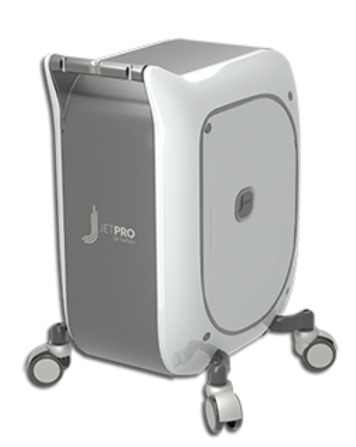
An additional approach that may be incorporated into a comprehensive scalp treatment protocol is the use of JetPeel technology for scalp preparation. JetPeel uses a high-velocity stream of liquid and gas to gently cleanse and exfoliate the superficial skin surface. This can help remove accumulated sebum, keratinized cells, cosmetic residue, and other superficial debris from the scalp.
Proper preparation of the scalp is particularly important when topical professional products are being applied. By reducing superficial barriers and improving the condition and cleanliness of the stratum corneum, JetPeel can help create a more suitable surface for the uniform application and transfer of compatible topical formulations. In this context, JetPeel can be viewed as a preparation step designed to optimize the scalp environment before the application of a selected hair-treatment product.
The objective is not to aggressively disrupt the skin barrier, but rather to achieve controlled exfoliation and cleansing while maintaining skin integrity. This may allow the subsequently applied product to make more consistent contact with the prepared scalp surface. The treatment parameters should therefore be adjusted according to the patient’s scalp condition, sensitivity, degree of sebum production, and the specific product being applied.
JetPeel and Exosome-Based Products
The combination of scalp preparation with emerging exosome-based or extracellular-vesicle-based products has attracted increasing interest in hair-restoration protocols. The rationale is that a properly cleansed and prepared scalp may provide a more favorable surface for the application and transfer of a topical formulation.
In a structured protocol, JetPeel may therefore be performed first to cleanse and gently exfoliate the scalp, followed by application of a compatible professional-use product according to the manufacturer’s instructions. This sequence provides a logical treatment pathway: assess the scalp, prepare the treatment area, apply the selected product, and monitor the clinical response.
It is important, however, to distinguish topical product transfer from confirmed follicular delivery. JetPeel may facilitate contact and transfer of compatible topical products across the superficial skin surface, but it should not be described as definitively delivering exosomes directly into the hair follicle unless this has been specifically demonstrated for the particular device, product, and protocol.
Exosome-based hair treatments remain an emerging area of aesthetic and regenerative medicine. Their proposed mechanisms include intercellular signaling and modulation of pathways involved in follicular activity, inflammation, and tissue repair; however, clinical evidence remains considerably less established than for conventional treatments such as minoxidil. Product source, formulation, sterility, manufacturing standards, and regulatory status should therefore be carefully considered before incorporation into a clinical protocol.
For GLP-1–associated telogen effluvium, scalp-based treatments should be considered adjunctive rather than a replacement for addressing the underlying trigger. Correcting inadequate nutritional intake, evaluating potential deficiencies, assessing for coexisting female pattern hair loss, and allowing the hair cycle time to recover remain fundamental components of management. JetPeel can complement this approach by providing controlled scalp cleansing and preparation before the application of appropriate topical products.
At Vancoderm Academy, these emerging approaches can also serve as an important educational example of how modern aesthetic medicine is evolving from simply performing procedures toward structured assessment, diagnosis, treatment planning, and evidence-based selection of technologies. Understanding why a treatment is being performed, what tissue is being targeted, how the technology interacts with the scalp, and what evidence supports the intervention is essential for responsible clinical practice.
The Role of Medical Aesthetic and Trichology Education
The growing number of patients using GLP-1 medications highlights the importance of recognizing medication-associated changes that may present in aesthetic and wellness settings.
Healthcare and aesthetic practitioners should understand the difference between association and causation. When hair loss occurs during GLP-1 therapy, the medication itself may not be directly damaging the follicle. The associated rapid weight loss, reduced nutritional intake, and physiological stress may be the more relevant mechanisms.
Trichoscopy provides practitioners with an important non-invasive method of assessing scalp and hair characteristics and can improve clinical decision-making when combined with a thorough patient history.
 Learn Medical Aesthetics at Vancoderm Academy
At Vancoderm Academy Institute of Aesthetic Medicine and Wellness, our educational approach combines medical knowledge with practical, hands-on training to help students develop a deeper understanding of skin, hair, scalp, and aesthetic medicine.
Our Clinical Practitioner Specialist Diploma in Medical Aesthetics provides comprehensive education in medical aesthetics and incorporates clinical assessment, advanced aesthetic technologies, and practical experience. Students learn to approach aesthetic concerns through structured assessment rather than treating isolated symptoms.
The next Medical Aesthetics Diploma intake begins October 1, 2026.
If you are interested in developing advanced knowledge and practical skills in medical aesthetics, contact Vancoderm Academy to learn more about the program, admission requirements, and upcoming intake.
Vancoderm Academy Institute of Aesthetic Medicine and Wellness — North Vancouver, British Columbia.