
 Vancodermadmin
Immediate Application of Mineral Sunscreen After Microneedling: Benefits, Risks, and Clinical Considerations
 Faramarz Rafie MD / Vancoderm Academy and College [VDA] / Vancoderm Clinic [VDCmed]
Weekly Medical Aesthetics Blog
Introduction
The immediate application of sunscreen following microneedling is an important clinical consideration, particularly when the treatment is performed to improve skin texture, stimulate collagen production, reduce acne scarring, or address pigmentation concerns.
One of the most frequently discussed questions in post-microneedling care is whether a mineral sunscreen containing zinc oxide, titanium dioxide, or both should be applied immediately after the procedure or whether its application should be postponed until the skin barrier has sufficiently recovered.
There are arguments supporting both approaches. Some clinical recommendations favour avoiding sunscreen immediately after microneedling because of the temporary disruption of the epidermal barrier, the presence of microchannels, and the possibility of irritation. Other approaches consider the use of carefully selected mineral sunscreens beneficial, particularly when the patient has an increased risk of post-inflammatory hyperpigmentation (PIH) and needs to return to an environment where sun exposure cannot be avoided.
In clinical practice, this decision should not necessarily be treated as an absolute rule. The depth of microneedling, the extent of epidermal disruption, the presence of pinpoint bleeding, the patient’s pigmentation tendency, the formulation of the sunscreen, and the individual’s current skin condition should all be considered.
At Vancoderm Academy and College, our clinical experience has not demonstrated adverse reactions in the cases in which mineral sunscreen has been applied immediately after treatment. However, clinical experience should be considered alongside published evidence, and the absence of observed reactions does not establish universal safety.
The purpose of this article is to examine the biological mechanisms behind both the potential benefits and disadvantages of immediate mineral sunscreen application and to provide a risk-based approach for medical aesthetic practitioners.
Understanding the Skin Barrier After Microneedling
To understand why sunscreen application may be beneficial in some patients and potentially problematic in others, it is necessary to examine the physiological changes occurring immediately after microneedling.
Microneedling creates multiple controlled micro-injuries through the epidermis and, depending on the needle depth and treatment technique, into the dermis. These micro-injuries initiate a wound-healing response involving several biological processes.
The principal physiological changes include:
- Temporary disruption of the stratum corneum, which is the primary protective barrier of the skin.
- Formation of microscopic channels through the epidermis.
- Increased transepidermal water loss (TEWL).
- Activation of inflammatory mediators and local immune responses.
- Stimulation of fibroblasts and subsequent collagen and elastin remodelling.
- Temporary increased permeability to certain topical substances.
Possible pinpoint bleeding when the needles reach vascular structures in the superficial dermis.
The extent of these changes depends on the needle depth, needle configuration, speed of penetration, treatment pressure, number of passes, anatomical location, skin thickness, and individual tissue response.
An important distinction is that microneedling does not produce the same degree of barrier disruption in every patient. A superficial treatment that primarily affects the epidermis is biologically different from a deeper treatment that produces pinpoint bleeding.
Consequently, the same post-treatment skincare recommendation should not automatically be applied to every microneedling procedure.
Why Is Sunscreen Important Immediately After Microneedling?
The main argument supporting early photoprotection is the prevention of ultraviolet-induced inflammation and post-inflammatory hyperpigmentation.
Following microneedling, the skin enters an inflammatory and repair phase. Although inflammation is an essential component of the wound-healing process, excessive or prolonged inflammation can stimulate melanogenesis.
The relationship between inflammation and pigmentation
When skin tissue is injured, inflammatory mediators are released, including:
- Prostaglandins
- Leukotrienes
- Interleukin-1 (IL-1)
- Interleukin-6 (IL-6)
- Tumour necrosis factor-alpha (TNF-α)
These mediators participate in the inflammatory response and can influence melanocyte activity.
UV radiation, particularly UVA and UVB, can further stimulate inflammatory pathways and melanogenesis.
The resulting biological sequence can be described as follows:
- Microneedling-induced micro-injury
- Temporary epidermal barrier disruption and tissue inflammation
- Release of inflammatory mediators
- Activation of local inflammatory and wound-healing pathways
- Increased melanocyte stimulation
- Increased melanogenic signalling and melanin production
- Potential post-inflammatory hyperpigmentation, Particularly relevant in patients with a predisposition to pigmentation.
UV radiation can aggravate this process through additional pathways, including oxidative stress, DNA damage, and increased melanogenic signalling.
Therefore, photoprotection is particularly important in patients with darker Fitzpatrick skin phototypes, previous PIH, melasma, or a history of prolonged pigmentation following inflammatory skin conditions.
However, avoiding direct sunlight, using protective clothing, and seeking shade remain important even when sunscreen is applied.
How Do Mineral Sunscreens Work?
Mineral sunscreens primarily use two inorganic UV filters:
- Zinc oxide (ZnO)
- Titanium dioxide (TiO₂)
These substances provide protection against ultraviolet radiation through a combination of absorption and scattering, rather than functioning exclusively as physical reflectors, as is sometimes incorrectly described.
Zinc oxide
Zinc oxide (ZnO)
Zinc oxide provides broad-spectrum protection against UVA and UVB radiation. It is particularly useful in formulations intended for sensitive skin because it generally has a favourable skin-tolerability profile.
Zinc oxide absorbs ultraviolet photons and dissipates their energy through non-radiative processes. Some radiation is also scattered.
It is commonly incorporated into formulations designed for sensitive or compromised skin.
Zinc oxide is also used in certain skin-protective preparations because of its protective and soothing properties. However, its presence does not automatically make every zinc oxide sunscreen appropriate for immediate application to freshly microneedled skin.
Titanium dioxide
Titanium dioxide (TiO₂)
Titanium dioxide is another inorganic UV filter that primarily provides UVB and shorter-wavelength UVA protection, depending on particle characteristics and formulation.
Titanium dioxide absorbs and scatters ultraviolet radiation. Its protection profile differs from zinc oxide, and combining the two filters can provide broad-spectrum protection.
Why are mineral filters generally preferred over some chemical filters after procedures?
Mineral filters are generally less likely to cause certain types of chemical-filter-related irritation or allergic contact reactions.
However, this distinction should not be interpreted as meaning that mineral sunscreen is completely non-irritating.
A sunscreen is a complete formulation, not simply an active UV-filter ingredient. Its tolerability also depends on the ingredients used to suspend, stabilize, preserve, and spread the mineral particles.
This distinction is especially important when the skin barrier has been disrupted.
Why Can Sunscreen Cause Burning, Stinging, or Irritation Immediately After Microneedling?
This is one of the most important clinical questions.
A patient may tolerate the same sunscreen perfectly well under normal conditions but experience burning or stinging when it is applied immediately after microneedling.
There are several possible mechanisms.
Increased penetration through temporary microchannels
The stratum corneum normally acts as a protective barrier, limiting the penetration of external substances.
After microneedling, this barrier becomes temporarily disrupted.
The newly created microchannels can increase the accessibility of topical ingredients to deeper epidermal structures.
Depending on the formulation, some ingredients that would normally remain on the skin surface may gain access to tissue that is more sensitive to their presence.
This may increase the possibility of:
- Local irritation.
- Inflammatory responses.
- Stinging and burning sensations.
- Unwanted exposure of viable epidermal cells to formulation ingredients.
- Potential foreign-material deposition in tissue if inappropriate products enter sufficiently deep channels.
Importantly, this does not mean that every mineral particle penetrates the skin or reaches the dermis. Particle size, aggregation, coating, vehicle characteristics, and channel dimensions all influence penetration.
Alcohol and solvent-related irritation
Some sunscreen formulations contain alcohols or other solvents to improve spreading, drying time, and cosmetic appearance.
Examples include ethanol and certain volatile solvents.
When applied to skin with an intact epidermal barrier, these ingredients may be tolerated.
However, after microneedling, they may produce:
- Stinging sensations.
- Burning discomfort.
- Increased irritation.
- Additional dryness or barrier discomfort.
The risk depends on the concentration, formulation, and extent of barrier disruption.
Preservatives and fragrance-related reactions
Preservatives are used to prevent microbial contamination and maintain product stability.
Fragrances are added to improve the sensory characteristics of cosmetic products.
Certain preservatives and fragrance ingredients can cause irritant or allergic contact dermatitis.
After microneedling, the skin may be more susceptible to irritation because the protective barrier is temporarily impaired.
This is why fragrance-free and minimal-ingredient formulations are generally preferable during the early recovery period.
Occlusive ingredients and formulation characteristics
Some sunscreen products contain occlusive or film-forming ingredients to improve water resistance and maintain an even protective layer.
Occlusion is not inherently harmful. In fact, appropriate occlusion can reduce trans- epidermal water loss and support barrier recovery.
However, a heavy formulation applied to inflamed, warm, or highly disrupted skin may increase discomfort.
The formulation may also trap heat or sweat against the skin, potentially aggravating an already sensitive treatment area.
This is a formulation-dependent consideration rather than evidence that all occlusive mineral sunscreens are harmful.
Mechanical irritation during application
This factor is sometimes overlooked. Immediately after microneedling, even gentle mechanical contact can be uncomfortable. Rubbing, massaging, or repeatedly spreading sunscreen across the treated surface may:
- Increase mechanical stimulation of injured tissue.
- Aggravate erythema.
- Produce additional discomfort.
- Disturb fragile superficial tissue.
Therefore, even when a mineral sunscreen is considered appropriate, its application technique matters. Unnecessary rubbing should be avoided.
Sensitivity to individual sunscreen ingredients
A patient may have a pre-existing sensitivity to an ingredient in a sunscreen formulation. Although zinc oxide and titanium dioxide are generally well tolerated, other ingredients may include:
- Preservatives.
- Emulsifiers.
- Fragrances.
- Botanical extracts.
- Antioxidants.
- Film-forming agents.
- Additional UV filters.
These ingredients may contribute to irritation or contact allergy.
Clinical distinction: Burning immediately after application is more commonly suggestive of irritation or exposure of sensitive tissue than a newly developed allergic reaction. Allergic contact dermatitis is generally delayed and may present with itching, persistent redness, swelling, or eczema-like changes.
What Does Scientific Research Say About Immediate Mineral Sunscreen Application?
The scientific literature does not support an absolute statement that all sunscreens must be avoided immediately after microneedling. Equally, it does not establish that every mineral sunscreen formulation is safe for every patient immediately after treatment.
One particularly relevant publication is the 2021 study by Meyer and colleagues.
Study: Analysis of Immediate Use of Sunscreen After Microneedling
Analysis of immediate use of sunscreen after microneedling. The researchers investigated sunscreen application following different microneedling procedures. The study involved two phases.
First phase: Histological investigation
The researchers evaluated the penetration of different sunscreen formulations using human skin obtained from an abdominoplasty procedure.
The findings demonstrated an important difference between the formulations:
The physical-chemical sunscreen demonstrated deeper penetration, with pigment identified among collagen fibres and within dermal fibroblast cytoplasm.
The physical sunscreen demonstrated pigment confined to the superficial epidermal layer.
This finding is particularly relevant because it raises questions about the potential consequences of introducing certain sunscreen formulations into skin with disrupted barrier integrity.
Second phase: Clinical investigation
Thirty volunteers were divided into three groups:
Group 1 received roller microneedling.
Group 2 received microneedling pen treatment.
Group 3 received fractional radiofrequency treatment.
The researchers evaluated the use of physical sunscreen following these procedures.
The study reported no adverse reactions such as itching, pain, soreness, or hyperaemia associated with the physical sunscreen application.
The authors concluded that physical sunscreen application following the investigated procedures was safe.
Clinical interpretation
This study provides support for the potential use of mineral sunscreen immediately after microneedling.
However, several limitations should be acknowledged:
- The clinical sample consisted of only 30 participants.
- The study does not establish safety for every sunscreen formulation.
- It does not establish a universal safe needle-depth threshold.
The findings should not automatically be extrapolated to patients with extensive bleeding, severe barrier disruption, active dermatitis, or other complications.
A lack of observed adverse reactions in a relatively small study does not exclude uncommon adverse effects.
Nevertheless, it is an important study because it challenges the assumption that mineral sunscreen must always be avoided immediately following microneedling.
Reference: Meyer et al. (2021), Photodermatology, Photoimmunology & Photomedicine.
Additional research on zinc oxide penetration
Research published in the Journal of Investigative Dermatology investigated the penetration and safety of zinc oxide nanoparticles following repeated application to human skin.
The researchers found that zinc oxide nanoparticles accumulated on the skin surface and within skin furrows but did not enter the viable epidermis or cause measurable cellular toxicity under the investigated conditions.
This provides additional evidence supporting the tolerability of zinc oxide on intact skin.
However, there is an important limitation: intact-skin studies cannot independently establish the safety of applying the same product immediately after microneedling, when microchannels are present.
Read the zinc oxide nanoparticle safety study.
What do clinical recommendations say?
A recent systematic review with expert-panel recommendations on dermocosmetic skincare following aesthetic procedures emphasizes gentle cleansing, barrier-supportive moisturizers, sun avoidance, and sunscreen use when outdoor exposure is unavoidable.
It particularly highlights the importance of photoprotection in patients with a high risk of PIH.
The review also recognizes that microneedling-associated micropores may require several days for complete barrier recovery.
This is an important distinction: recommending sunscreen for photoprotection does not necessarily mean that every sunscreen should be applied to every patient immediately after treatment.
Read the systematic review and expert recommendations.
Immediate Application: Potential Benefits Versus Disadvantages
| Potential benefits | Potential disadvantages |
| Reduces exposure to UVA and UVB radiation | Possible stinging and burning |
| Helps reduce UV-related melanogenic stimulation | Increased exposure to formulation ingredients through disrupted skin |
| May reduce the risk of UV-aggravated PIH | Potential irritant or allergic contact dermatitis |
| Provides protection when the patient must go outdoors | Mechanical irritation during application |
| Zinc oxide and titanium dioxide generally have favourable tolerability | Some formulations may contain alcohol, fragrance, or irritating additives |
| May be particularly useful for patients with pigmentation concerns | Product application may be inappropriate when there is significant bleeding or extensive tissue disruption |
The clinical decision should therefore balance two competing considerations:
- First: Protecting the skin from ultraviolet exposure during an inflammatory period.
- Second: Avoiding unnecessary exposure of disrupted skin to potentially irritating or unsuitable topical formulations.
Neither consideration should be ignored.
Clinical Risk Assessment: When Should Immediate Mineral Sunscreen Be Considered?
In our clinical approach, the decision should be individualized according to the patient’s pigmentation risk and the degree of tissue disruption.
Two major variables should be assessed:
- The patient’s risk of developing post-inflammatory hyperpigmentation.
- The depth and severity of microneedling-induced tissue disruption.
Patients with increased PIH risk
Patients who may benefit more from early photoprotection include those with:
- Fitzpatrick skin phototypes IV, V, and VI.
- A previous history of post-inflammatory hyperpigmentation.
- Melasma or a tendency toward persistent pigmentation.
- Previous pigmentation following acne, chemical peels, or aesthetic procedures.
- A strong tendency to develop dark marks following skin inflammation.
- Expected unavoidable outdoor exposure following treatment.
These factors should be assessed individually. Fitzpatrick skin type alone does not determine the patient’s complete PIH risk.
Assessing treatment depth and tissue response
The degree of tissue disruption is equally important.
Superficial microneedling:
- Primarily epidermal or superficial treatment.
- Limited tissue disruption.
- No significant bleeding.
- Relatively limited inflammatory response.
- Immediate mineral sunscreen may be considered
Provided that the skin is suitable, the formulation is well tolerated, and the clinician has assessed the treatment area.
Deeper microneedling:
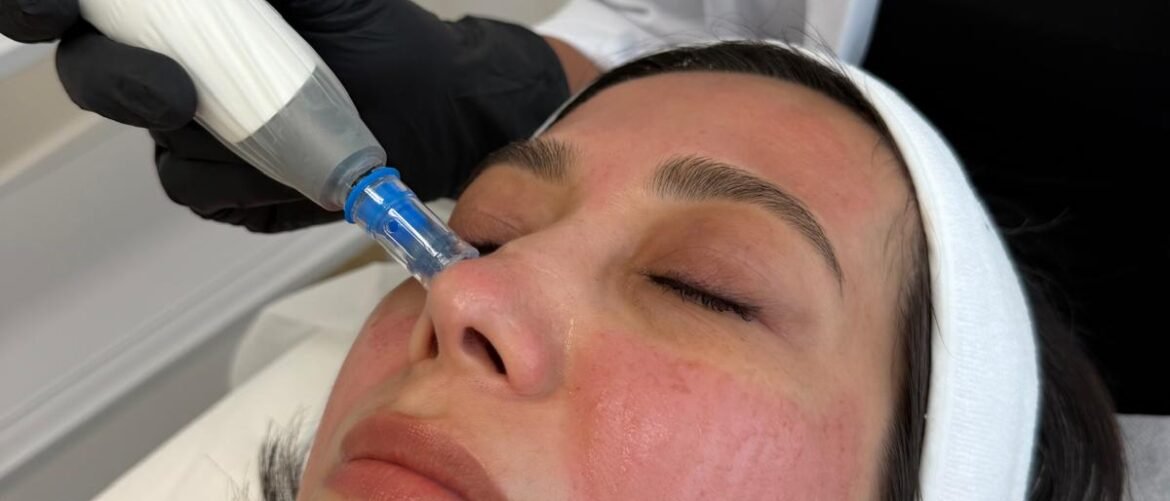
Microneedling “Vampire Facial” with SkinPen | Usha Rajagopal, MD
Deeper penetration into the dermis.
- Possible pinpoint bleeding.
- More pronounced tissue disruption.
- Greater need for careful wound management.
- Consider delaying direct sunscreen application
Particularly when there is significant barrier disruption, bleeding, or exudation. Prioritize appropriate wound care and strict physical sun avoidance until the skin is suitable for sunscreen.
An important clinical clarification is that pinpoint bleeding is an indicator of dermal vascular involvement, but it is not a precise measurement of treatment depth or barrier impairment. The absence of bleeding also does not guarantee that the epidermal barrier is intact.
Therefore, the clinician should consider the actual tissue response rather than relying exclusively on the presence or absence of bleeding.
Understanding the Clinical Decision Through a Risk-Based Approach
The following framework can help medical aestheticians make a more consistent decision.
| Clinical situation | Suggested consideration |
| High PIH risk, superficial treatment, no significant bleeding | Consider immediate application of a suitable mineral sunscreen |
| High PIH risk, deeper treatment, pinpoint bleeding | Prioritize sun avoidance and protective measures; delay direct application until appropriate |
| Low PIH risk, superficial treatment | Immediate sunscreen may be considered if tolerated, but may not be necessary if exposure is avoided |
| Low PIH risk, deeper treatment, pinpoint bleeding | Prefer barrier-supportive aftercare and postpone sunscreen until the skin is sufficiently recovered |
| Active irritation, dermatitis, or suspected product sensitivity | Avoid introducing a new sunscreen formulation immediately |
This framework is not a validated clinical scoring system. It is a practical approach to individualizing aftercare based on the available evidence and clinical judgment.
What Type of Mineral Sunscreen Should Be Selected?
If the clinician decides that immediate sunscreen application is appropriate, product selection becomes particularly important.
The objective is to provide effective UV protection while minimizing unnecessary exposure to ingredients that could irritate compromised skin.
The preferred characteristics include:
- Mineral UV filters
- Zinc oxide.
- Titanium dioxide.
- A combination of both, when appropriate.
- Minimal formulation
- Prefer products that are:
- Fragrance-free.
- Alcohol-free, particularly without irritating concentrations of ethanol.
- Non-comedogenic.
- Formulated for sensitive skin.
- Free from unnecessary exfoliating acids and potentially irritating active ingredients.
Appropriate SPF and UVA protection
A broad-spectrum sunscreen with SPF 30 or higher is generally appropriate for routine photoprotection. SPF primarily measures UVB protection, so adequate UVA protection must also be considered.
Consideration of visible light: For patients with melasma or a strong tendency toward pigmentation, tinted mineral sunscreens containing iron oxides may offer additional protection against visible light.
However, tinted formulations are not automatically suitable for freshly microneedled skin. Their complete formulation and tolerability must be considered.
What Should Be Applied Instead When Immediate Sunscreen Is Not Appropriate?
When the treatment has caused significant tissue disruption, the priority should be appropriate wound care rather than immediately introducing multiple cosmetic products.
A suitable post-treatment protocol may include:
- Gentle cleansing
- Use an appropriate sterile or otherwise suitable gentle cleansing approach according to the clinical protocol. Avoid aggressive cleansing and unnecessary rubbing.
- Barrier-supportive healing cream
- A simple, fragrance-free barrier-supportive healing moisturizer may help reduce transepidermal water loss and improve skin comfort.
- Ingredients commonly used in barrier-supportive products include:
- Panthenol.
- Glycerin.
- Ceramides.
- Hyaluronic acid.
- Petrolatum, where appropriate.
The formulation should be selected according to the degree of tissue disruption and the intended use.
Avoid unnecessary active ingredients
During early recovery, avoid introducing retinoids, exfoliating acids, strong vitamin C formulations, fragrances, and other potentially irritating ingredients unless specifically indicated by the treating clinician.
Photoprotection without direct product application
When sunscreen application is postponed, the patient should be advised to:
- Avoid direct sunlight.
- Remain in shaded environments.
- Wear a wide-brimmed hat.
- Use protective clothing.
- Avoid prolonged outdoor exposure.
If unavoidable exposure is anticipated, the clinician should establish an appropriate photoprotection plan rather than assuming that leaving the skin completely unprotected is preferable.
When Can Sunscreen Be Reintroduced?
There is no universally validated time interval that applies to every microneedling depth and every patient.
The decision should be based on the recovery of the epidermal barrier and the clinical appearance of the treated skin.
In practical terms:
Following superficial treatments, a suitable mineral sunscreen may be considered earlier if the skin tolerates it.
Following deeper treatments, particularly those involving pinpoint bleeding, sunscreen should generally be postponed until the skin has sufficiently recovered.
If there is persistent erythema, exudation, significant tenderness, or visible barrier disruption, the clinician should reassess before introducing sunscreen.
Some clinical protocols recommend avoiding non-prescribed topical products for the first 24 hours. For example, Chelsea and Westminster Hospital advises using only its prescribed cooling gel during this period. This illustrates why institutional protocols may differ from other approaches.
Chelsea and Westminster Hospital: Microneedling aftercare instructions.
The important point is that 24 hours should not be treated as an automatic clearance time for every patient. Deeper treatments may require longer recovery.
Practical Clinical Recommendations at Vancoderm Academy
Based on the available research, physiological principles, and our clinical experience, we recommend that medical aestheticians consider the following approach.
Scenario 1: Superficial microneedling with increased pigmentation risk
When the treatment is primarily limited to the epidermis, there is no significant bleeding, and the patient has a history of PIH or a strong pigmentation tendency, immediate application of an appropriate mineral sunscreen may be considered.
The potential benefit of reducing UV exposure may outweigh the relatively low risk of irritation associated with a carefully selected formulation.
Scenario 2: Deeper microneedling with pinpoint bleeding
When the treatment reaches deeper tissue and produces pinpoint bleeding, the epidermal barrier and underlying tissue are more substantially disrupted.
In these circumstances, even if the patient has a high pigmentation risk, it may be more appropriate to postpone direct sunscreen application.
During this period, strict sun avoidance and physical photoprotection should be emphasized. A suitable barrier-supportive healing product may be used according to the treatment protocol.
Scenario 3: Superficial treatment with low pigmentation risk
If the patient has a relatively low risk of PIH and can avoid direct sun exposure, there may be little reason to introduce sunscreen immediately.
The clinician may prioritize skin recovery and introduce sunscreen once the skin is sufficiently recovered.
Scenario 4: A patient who must return to work or go outdoors
This situation requires particular attention.
If a patient cannot avoid outdoor exposure, the practitioner should assess whether immediate mineral sunscreen application is appropriate according to the treatment depth and current skin condition.
If the skin is suitable, a carefully selected mineral sunscreen may be considered. If the skin is significantly disrupted, physical protection and minimizing exposure should take priority until an appropriate sunscreen can be introduced.
Why Do Some Clinical Protocols Recommend Sunscreen After 24 Hours Rather Than 72 Hours?
The recommendation to reintroduce sunscreen after 24 hours is based on a different clinical consideration from waiting for complete barrier recovery.
There are two separate questions:
- Has the skin recovered sufficiently to tolerate a particular topical formulation?
- Has the skin recovered completely?
- These are not necessarily the same.
A patient may have sufficient recovery to tolerate a carefully formulated mineral sunscreen after 24 hours, even though some aspects of barrier function and tissue repair are still ongoing.
Conversely, another patient may continue to experience significant irritation after 24 hours and may not be ready for sunscreen application.
A 24-hour recommendation is therefore a practical clinical protocol, not proof that the epidermal barrier or dermal–epidermal junction has completely recovered.
What happens during the first 72 hours?
A study by Han et al. (2012), published in Dermatologic Surgery, evaluated facial skin barrier recovery following microneedle treatment.
The researchers investigated different needle lengths and numbers of applications and monitored transepidermal water loss, skin hydration, and erythema over 72 hours.
They reported recovery of skin barrier function within 72 hours in the investigated treatment conditions.
This study is relevant, but its findings should be interpreted carefully. It investigated relatively shallow microneedle treatments of 0.15 mm and 0.25 mm. It does not establish that deeper cosmetic microneedling involving 1.0–2.0 mm penetration has the same recovery timeline.
A separate study examining microneedling and microneedling-radiofrequency procedures also found that barrier recovery varied according to treatment depth and anatomical location. Some facial sites treated at 1.5 mm still showed elevated transepidermal water loss at 48 hours.
An important distinction: The epidermal barrier versus the dermal–epidermal junction
The epidermal barrier is primarily associated with the stratum corneum and its intercellular lipid structure.
The dermal–epidermal junction is a specialized basement membrane zone that connects the epidermis to the underlying dermis. It contains structural proteins and anchoring complexes that maintain tissue attachment.
These are different anatomical structures and should not be used interchangeably.
Microneedling may create channels that cross the epidermis and extend into the dermis. The subsequent repair process involves re-epithelialization, restoration of barrier function, and tissue remodeling.
It would be scientifically inaccurate to state that the entire dermal–epidermal junction universally requires exactly three days to recover after microneedling.
The 72-hour finding in the Han study relates to measured barrier-function parameters, not histological confirmation of complete basement membrane or dermal–epidermal junction regeneration.
This distinction is important when deciding whether to use a topical cosmetic product during the first three days.
Does Postponing Sunscreen for Three Days Mean the Patient Must Stay Home?
Absolutely not.
Requiring every microneedling patient to remain indoors for three days would be impractical and unnecessary.
Modern clinical aftercare should recognize that patients have professional, family, and social responsibilities. The objective should be to minimize unnecessary UV exposure without creating an unrealistic recovery protocol.
If direct sunscreen application is postponed, other protective measures can be used.
- Wide-brimmed hats
A wide-brimmed hat provides physical shade to the face and reduces direct sunlight exposure.
- Seeking shade
Encourage patients to walk in shaded areas, avoid direct sunlight, and choose shaded parking and entrances whenever possible.
- Protective clothing and sunglasses
Appropriate clothing and UV-protective sunglasses help reduce exposure to sunlight.
- Awareness of UVA exposure through windows
UVA can penetrate ordinary window glass. Patients who drive or sit near windows for extended periods should consider this additional source of exposure.
It is also important to remember that shade does not eliminate all UV exposure. Diffuse and reflected radiation may still reach the skin.
For patients with a high risk of pigmentation, a combination of shade, protective clothing, reduced outdoor exposure, and sunscreen once the skin is suitable provides a more comprehensive approach.
A Practical Timeline for Sunscreen Reintroduction
The following timeline is a proposed educational framework rather than a universally validated microneedling protocol.
| Time after procedure | Clinical considerations |
| Immediately to 24 hours | Prioritize appropriate aftercare, avoid unnecessary topical products, and minimize UV exposure |
| 24–48 hours | Reassess skin condition. Consider a suitable mineral sunscreen if the barrier appears sufficiently recovered and the product is tolerated |
| 48–72 hours | Many superficial treatments will have substantially recovered barrier function; reassess before introducing sunscreen if it was previously postponed |
| After 72 hours | Reintroduce sunscreen when clinically appropriate; deeper treatments may still require additional recovery time |
The important point is that these intervals are not automatic permissions to apply products. They are reassessment points.
For deeper procedures, the clinician should not assume that the skin is ready simply because 72 hours have elapsed.
How Can We Balance Three Clinical Priorities?
This is perhaps the most important part of the discussion.
A medical aesthetician is not simply deciding when to apply sunscreen. The practitioner is balancing three clinical objectives:
Preventing post-inflammatory hyperpigmentation
Minimize UV exposure and additional melanogenic stimulation during the inflammatory period.
Supporting tissue recovery
Avoid unnecessary irritation and unsuitable topical ingredients while the epidermal barrier is recovering.
Minimizing unnecessary downtime
Develop realistic aftercare recommendations that allow patients to return to their normal activities safely.
These objectives are sometimes competing rather than completely complementary.
For example, postponing sunscreen may reduce the possibility of irritation from topical ingredients, but it also removes one convenient method of photoprotection.
On the other hand, immediately applying sunscreen may reduce UV exposure but could introduce unnecessary irritation in a patient whose skin barrier is substantially disrupted.
Therefore, the practitioner should not focus exclusively on either complete barrier recovery or immediate pigmentation prevention. Both must be considered.
 Our Proposed Clinical Decision-Making Model
At Vancoderm Academy, we recommend teaching students to consider four major variables before deciding when to introduce mineral sunscreen.
First: Treatment depth and tissue response
Was the procedure superficial, or did it involve deeper dermal penetration with pinpoint bleeding?
Second: Patient pigmentation risk
Does the patient have Fitzpatrick IV–VI skin, previous PIH, melasma, or a history of persistent pigmentation?
Third: Current skin condition
Is the skin calm, mildly erythematous, significantly inflamed, bleeding, exudative, or showing signs of barrier disruption?
Fourth: Practical exposure circumstances
Will the patient be driving, working near windows, walking outdoors, or exposed to direct sunlight? Can physical protection reasonably minimize exposure?
These considerations should determine the timing of sunscreen introduction.
Suggested clinical decision pathway
Assess treatment depth and tissue response
Superficial treatment
Minimal disruption, no significant bleeding
Assess PIH risk and product suitability
Consider immediate mineral sunscreen
Deeper treatment
Pinpoint bleeding or substantial disruption
Prioritize wound care and physical protection
Reassess at 24–72 hours or later
Introduce suitable broad-spectrum sunscreen when the skin is clinically ready.
Final Perspective: There Is No Universal 24-Hour or 72-Hour Rule
The recommendation to apply sunscreen after 24 hours is not necessarily wrong, and the recommendation to wait 72 hours is not necessarily wrong either.
The difference is the clinical situation to which each recommendation is being applied.
A superficial microneedling treatment may allow earlier sunscreen introduction, whereas deeper treatments involving more substantial tissue disruption may justify postponing direct application.
Importantly, waiting for complete epidermal barrier recovery does not mean that the patient must remain at home without any photoprotection. Physical protection, shade, protective clothing, and limiting unnecessary outdoor exposure are practical alternatives during this period.
We should also avoid confusing the recovery of the stratum corneum with complete regeneration of the dermal–epidermal junction. These are distinct biological processes, and a three-day barrier-recovery finding cannot be used as proof that all deeper tissue structures have fully regenerated.
Our ultimate objective should be to minimize unnecessary downtime while maintaining effective pigmentation prevention and supporting normal tissue healing.
This is why individualized clinical judgment is essential in medical aesthetics.
Final Clinical Conclusion
The question of immediate sunscreen application after microneedling should not be approached as a simple yes-or-no decision.
The available evidence includes a clinical study supporting the safety of physical sunscreen following different microneedling procedures, while other clinical protocols recommend temporary avoidance of topical products during the initial recovery period.
These differences reflect variations in treatment depth, skin condition, product formulation, and clinical protocols.
The most important consideration is the balance between two factors: preventing UV-induced pigmentation and avoiding unnecessary irritation or exposure of injured tissue to topical ingredients.
At Vancoderm Academy, we believe that medical aestheticians should make this decision based on individual patient assessment rather than applying an identical aftercare protocol to every client.
A patient with a high risk of PIH who undergoes superficial microneedling may benefit from carefully selected immediate mineral photoprotection. Conversely, a patient undergoing deeper microneedling with pinpoint bleeding may be better managed initially with appropriate wound care and strict physical sun protection, postponing direct sunscreen application until the skin has recovered sufficiently.
The central clinical principle is that the degree of tissue disruption and the patient’s individual pigmentation risk should jointly determine the timing of sunscreen application.
The objective is not simply to apply sunscreen as early as possible, but to provide effective photoprotection without compromising the skin’s natural healing process.
Additional scientific references for this section
- Han TY et al. (2012). Facial Skin Barrier Function Recovery After Microneedle Transdermal Delivery Treatment. Dermatologic Surgery, 38(11), 1816–1822. Original publication.
- The Significance of Trans-Epidermal Water Loss After Microneedling and Microneedling-Radiofrequency Procedures: Histological and IRB-Approved Safety Study. Full research article.
- Effects of Microneedle Length, Density, Insertion Time and Multiple Applications on Human Skin Barrier Function. PubMed research.
- American Academy of Dermatology. Microneedling can fade scars, uneven skin tone, and more. Clinical guidance.
- Chelsea and Westminster Hospital NHS Foundation Trust. Microneedling Post-treatment Information. Institutional aftercare recommendations.
- Meyer et al. (2021). Analysis of immediate use of sunscreen after microneedling. Photodermatology, Photoimmunology & Photomedicine. PubMed – Original research.
- Concomitant Use of Dermo-Cosmetic Skin Care in Aesthetic Procedures: Systematic Review with Expert Panel Recommendations. Full-text review.
- Support for the Safe Use of Zinc Oxide Nanoparticle Sunscreens: Lack of Skin Penetration or Cellular Toxicity after Repeated Application in Volunteers. Journal of Investigative Dermatology. PubMed – Research study.
- StatPearls, NCBI Bookshelf. Clinical reference.
- American Academy of Dermatology. Microneedling can fade scars, uneven skin tone, and more. Patient and clinical guidance.