 Vancodermadmin
The Future of Facial Fillers: Essential Techniques and Trends from 2025
 Faramarz Rafie MD / Vancoderm Academy and College [VDA] / Vancoderm Clinic [VDCmed]
The field of medical aesthetics continues to evolve rapidly, and 2025 marks a major turning point in how practitioners approach dermal fillers. This year, the industry is shifting toward enhanced safety, refined precision, and a strong preference for natural, harmonious results. Below, we highlight the key trends shaping dermal filler practice in 2025.
1. Natural, Subtle Aesthetics: “Less Is More”
One of the most significant trends in 2025 is the movement toward natural, anatomically precise facial enhancements, with patients increasingly seeking subtle refinements rather than dramatic volume increases. Modern aesthetic practice emphasizes facial balancing—a comprehensive approach that considers the interplay between bone structure, soft tissue, and fat pads—to achieve symmetry, proportion, and youthful contours.
Clinically, this requires a deep understanding of facial anatomy, including the location of key vascular structures, ligamentous support, and areas prone to age-related volume loss. Injectors are now strategically sculpting the cheeks, chin, and jawline with carefully calculated volumes, layering injections in deep structural planes and superficial subdermal layers to enhance natural contours without creating overfilled or artificial appearances.
Hyaluronic acid (HA) fillers remain the most widely used modality for achieving these results due to their biocompatibility, reversibility, and versatility. When applied using micro-droplet, microcannula, or layered injection techniques, HA fillers can restore support, subtly augment volume, and refine facial proportions while minimizing the risk of complications such as vascular occlusion or Tyndall effect.
This approach has popularized what Vogue describes as the “undetectable” or “luxury subtle” look—enhancements that discreetly elevate facial structure while preserving natural expressions, dynamic movement, and individual character, representing the pinnacle of modern, patient-centered aesthetic practice.
 2. Personalization & Hybrid Treatment Plans
2025 sees injectors adopting integrated, hybrid treatment strategies, combining fillers, neuromodulators, and energy-based therapies (laser, radiofrequency) to improve volume, structure, and skin quality simultaneously.
Customized filler blends, tailored to the patient’s anatomy and aesthetic goals, are now standard practice. Advanced 3D imaging and simulation tools enable precise treatment planning and patient visualization of anticipated outcomes.
Age-specific protocols are also trending. Younger patients benefit from preventative filler approaches to support natural facial architecture, while older patients may receive restorative, structural filler strategies to address age-related volume loss and soft tissue descent.
3. Significant Growth in Male Aesthetic Clients
The male demographic represents one of the fastest-growing populations seeking dermal filler treatments, reflecting broader acceptance of aesthetic procedures among men. Clinically, male patients present distinct facial anatomy and aesthetic goals compared to female patients, including larger bone structure, stronger jawlines, more prominent brow ridges, and thicker soft tissue layers.
As a result, treatment approaches must be anatomically precise and gender-specific. For example:
-
Jawline contouring in men often involves deeper, structural filler placement along the mandibular angle and body to enhance definition while maintaining a masculine profile.
-
Undereye or tear trough correction requires careful assessment of orbital anatomy, infraorbital vessels, and soft tissue thickness, using microcannula or micro-droplet techniques to restore volume without feminizing the midface.
-
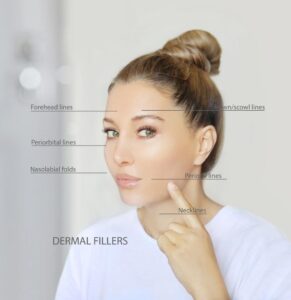
Softening deep nasolabial or marionette lines in men focuses on subtle volumization rather than overcorrection, preserving natural expression and avoiding a “lifted” or rounded appearance.
Clinics are adapting by offering gender-inclusive consultations, marketing, and treatment protocols. This includes educating male patients on safety, minimally invasive options, and natural enhancement principles, ensuring results are subtle, balanced, and aligned with male facial aesthetics.
The trend underscores the importance of personalized, anatomy-driven planning and advanced injection techniques to meet the growing demand for masculine yet natural facial enhancements.
 4. Advanced Safety and Precision Techniques
In 2025, patient safety and injection precision remain central to best practices in dermal filler treatments. Modern injectors are increasingly adopting techniques that minimize risks, enhance predictability, and optimize outcomes.
Microcannula Injection Technique:
-
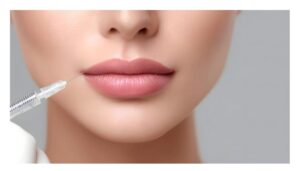
Microcannulas are blunt-tipped instruments that allow filler placement through a single entry point.
-
This technique reduces bruising and edema, minimizes trauma to soft tissue, and significantly lowers the risk of vascular injury, particularly in high-risk areas such as the tear trough, nasolabial folds, and perioral region.
-
Microcannulas enable smoother, linear threading of filler across multiple planes, providing uniform distribution and improved blending with surrounding tissue.
Ultrasound-Guided Filler Injections:
-
High-frequency ultrasound allows real-time visualization of blood vessels, existing fillers, and anatomical structures, enhancing both safety and precision.
-
Injectors can identify and avoid key vascular landmarks (e.g., angular artery, infraorbital artery) and detect areas of prior filler placement to prevent overcorrection or intravascular injection.
-
Ultrasound guidance is especially valuable for tear trough, nasal, and periorbital treatments, where anatomy is delicate and complications can be severe.
Training, Standardization, and Regulatory Compliance:
-
With the expanding global filler market, there is heightened emphasis on formal training, certification, and adherence to standardized injection protocols.
-
Best practices include understanding layered facial anatomy, filler rheology, and safe volume placement, as well as being prepared with reversal agents like hyaluronidase.
-
Clinics are encouraged to implement risk assessment protocols, safety checklists, and documentation procedures to maintain consistent, high-quality care.
By combining advanced injection techniques with anatomical expertise and standardized safety protocols, practitioners can deliver natural, predictable results while minimizing complications, reflecting the industry’s 2025 emphasis on precision, professionalism, and patient-centered care.
5. Next-Generation & Biodegradable Filler Innovations
In 2025, dermal filler development is increasingly focused on safety, biocompatibility, and long-term patient satisfaction. Manufacturers are producing next-generation fillers with improved cross-linking technology, which enhances structural support, longevity, and integration into tissue while maintaining a natural feel.
Biodegradable, “cleaner” filler options—predominantly hyaluronic acid (HA) formulations—remain the preferred choice due to their predictable resorption and reversibility. These fillers allow practitioners to provide precise, layer-specific augmentation, knowing that results can be fine-tuned over time or reversed if necessary using hyaluronidase.
Advancements also include tailored rheology profiles, enabling specific fillers for structural support, mid-depth volumization, or superficial fine line correction. This versatility supports a layered, anatomically informed approach, reducing the risk of overcorrection, nodules, or unnatural contours.
Regulatory and quality standards have become increasingly stringent worldwide. Agencies are emphasizing good manufacturing practices, biocompatibility testing, and clinical safety data, ensuring that fillers meet high standards for patient safety and predictable outcomes. This regulatory oversight also encourages ethical production and the use of non-animal-derived, environmentally sustainable materials.
Overall, the trend toward biodegradable, clinically versatile fillers reflects a shift toward safer, more controlled, and patient-tailored aesthetic treatments, enabling injectors to achieve refined, natural, and long-lasting results while maintaining the highest professional standards.
6. Market Growth & Changing Demographics
The global dermal filler market continues to experience robust growth, with strong projections through 2025 and beyond. This expansion is driven not only by increasing aesthetic awareness but also by advances in safer, more versatile filler technologies and minimally invasive techniques that appeal to a broader patient population.
Younger demographics, particularly Millennials and early Gen Z, are among the fastest-growing groups seeking aesthetic treatments. In the UK, over half of dermal filler clients are under age 35, reflecting a shift toward preventative and subtle facial rejuvenation. Younger patients are more likely to pursue early intervention strategies, focusing on maintaining facial structure, enhancing natural features, and preventing age-related volume loss.
The Asia-Pacific region is a key growth market, with rapid adoption fueled by rising disposable incomes, cultural acceptance of aesthetic procedures, and improved access to clinically advanced treatments. Practitioners in these regions increasingly emphasize anatomically informed, minimally invasive approaches tailored to diverse facial structures and ethnic variations, ensuring safe and culturally appropriate outcomes.
This demographic shift underscores the importance of personalized treatment planning, age-appropriate protocols, and ethnically sensitive injector training, allowing clinicians to meet the evolving expectations of a younger, more informed, and aesthetically discerning patient population.
7. Digital Influence & Social Media Pressure
The “Zoom Boom” persists, with increased self-awareness of facial appearance during video calls.
Social media influences aesthetic trends by promoting transparency, before-and-after content, and generating interest in minimally invasive procedures.
Digital tools further enable virtual consultations, personalized treatment planning, and safer decision-making for both practitioners and patients.
8. Regulation, Safety, and Ethical Practice
As the dermal filler market expands, there is a growing emphasis on certified injector training, strict adherence to safety standards, and ethical patient care. Sustainability is becoming increasingly important, with a focus on eco-friendly packaging and ethically sourced materials. Non-animal-derived filler options are also gaining popularity.
9. Filler Dissolution & the “Great Reset” Trend
There is a growing trend of patients opting to dissolve previous dermal filler treatments to restore a more natural, harmonious facial appearance. This approach, often achieved using hyaluronidase for hyaluronic acid fillers, allows clinicians to correct overfilled areas, asymmetry, or irregularities safely and predictably. It reflects a broader movement toward refined, individualized facial aesthetics, prioritizing proportionality, symmetry, and long-term facial health over dramatic volume.
Additionally, careful assessment of facial anatomy, filler type, and injection history is critical for achieving optimal outcomes, highlighting the importance of experienced, certified practitioners in managing these “reset” procedures.
Final Thoughts
The aesthetic landscape of 2025 emphasizes precision, safety, natural beauty, and personalized care. Vancoderm Academy & College remains committed to leading education and training, ensuring that our students and practitioners deliver the safest, most modern, and evidence-based treatments in the field of medical aesthetics.
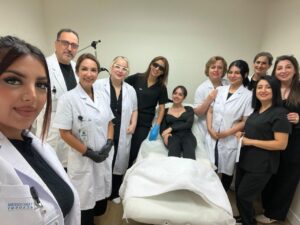 Thank you for reading! Vancoderm Academy and College is a pioneer and leader in medical aesthetic education, with a particular focus on injectables through hands-on seminars and workshops. We are committed to advancing the field globally and welcome opportunities for collaboration. Stay connected and follow us on Instagram, LinkedIn, Facebook, and TikTok to keep up with our latest courses, events, and insights.
Wishing you all the best in your aesthetic journey!
- Sources
- Colibri Beauty
- Rosvia.com
- Vogue
- K-Beauty Aesthetics
- PharmiWeb.com
- GlobeNewswire
- Precedence Research
- Aesthetic Medicine
- People.com