
 Vancodermadmin
Weekly Blog | Vancoderm Academy and College
Hair Shaft Variability (Anisotrichosis): Clinical Significance, Causes, Diagnosis, and Treatment
 Faramarz Rafie MD / Vancoderm Academy and College [VDA] / Vancoderm Clinic [VDCmed]
Understanding variations in hair shaft diameter is an important component of trichological assessment. Differences in hair thickness may reflect normal biological variation, genetic characteristics, progressive follicular miniaturization, or underlying hair and scalp disorders. Recognizing these patterns can help clinicians distinguish normal variation from clinically significant changes in hair growth.
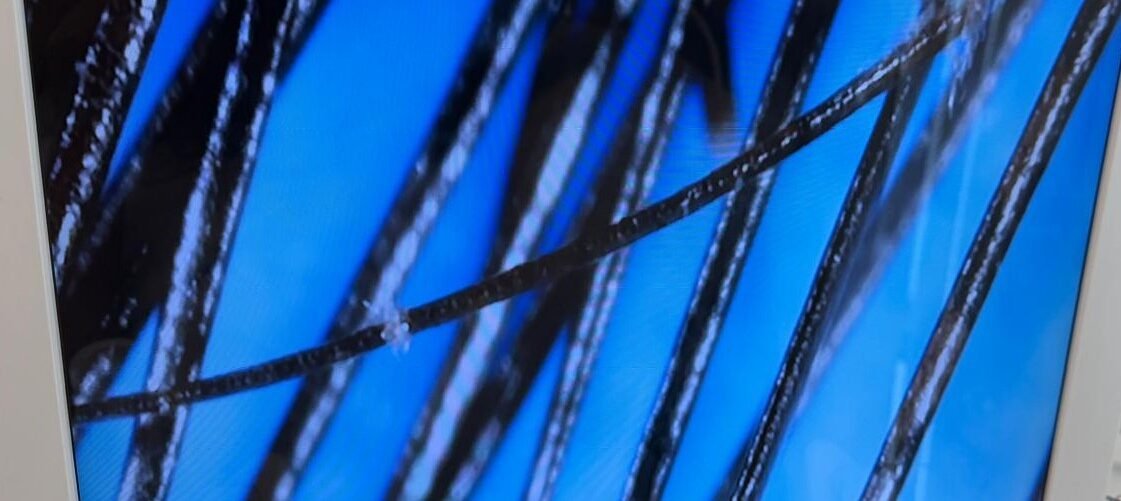
What Is Hair Shaft Variability (Anisotrichosis)?
Anisotrichosis refers to variation in the diameter or thickness of individual hair shafts within the same scalp region. The term is commonly used in trichology to describe differences between thicker, terminal hairs and finer, thinner hairs.
Hair shaft diameter is influenced by several factors, including genetics, follicular size, hormonal sensitivity, age, and the stage of the hair growth cycle. Some variation is physiologic and does not necessarily indicate disease. However, marked or regionally patterned variability may be a clinical sign of follicular miniaturization, particularly in androgenetic alopecia, also known as pattern hair loss.
Anisotrichosis is a descriptive finding rather than a standalone diagnosis. Its clinical significance depends on the distribution of the affected hairs, the degree of diameter variation, associated scalp findings, and the patient’s history.
 How to Identify Hair Shaft Variability
Hair shaft variability may be suspected when hairs in the same area appear noticeably different in thickness. For example, some hairs may retain their normal terminal diameter, while others appear progressively finer, shorter, and less pigmented.
Clinical examination alone may identify obvious differences, but subtle changes often require magnification.
Trichoscopy, also known as dermoscopy of the scalp, is a non-invasive examination technique that allows the clinician to evaluate hair shafts, follicular openings, and scalp skin at magnification. It is particularly useful for assessing diameter diversity and identifying other features associated with hair loss.
Important clinical observations include:
- Variation in hair shaft diameter: Coexistence of thick terminal hairs and finer hairs in the same region.
- Regional distribution: Greater variability over the frontal scalp, mid-scalp, or crown may raise suspicion of androgenetic alopecia, depending on the patient’s pattern of hair loss.
- Reduced hair density: A decrease in the number of visible terminal hairs may accompany follicular miniaturization.
- Changes in hair pigmentation and length: Miniaturized hairs may appear lighter, shorter, and finer than neighbouring terminal hairs.
- Associated scalp findings: Erythema, scaling, perifollicular changes, or loss of follicular openings may suggest additional or alternative pathology.
In clinical practice, diameter variability is interpreted alongside other findings rather than used in isolation. Trichoscopic criteria vary with the scalp region, patient population, and diagnostic context. A commonly cited finding in androgenetic alopecia is hair shaft diameter diversity, with marked variation often described when more than approximately 20% of hairs differ substantially in diameter. This threshold is a supportive criterion, not a universal diagnostic rule.
What Causes Anisotrichosis?
Hair shaft diameter variability can arise from several biological and clinical mechanisms.
1. Androgenetic Alopecia
Androgenetic alopecia is one of the most clinically important causes of increased hair shaft diameter diversity. It is a common, progressive, non-scarring form of hair loss influenced by genetic susceptibility and androgen signalling.
In susceptible scalp follicles, particularly those sensitive to dihydrotestosterone (DHT), repeated hair cycles may lead to progressive follicular miniaturization. Thick terminal hairs gradually become finer, shorter hairs, and the proportion of miniaturized hairs increases.
In men, this process commonly affects the frontal hairline, temples, and vertex. In women, it often presents as widening of the central part and reduced density over the crown, although patterns vary.
2. Genetic and Physiological Variation
Hair thickness differs naturally between individuals and across scalp regions. Genetic background, age, hair characteristics, and normal follicular variation can contribute to differences in shaft diameter without indicating a pathological process.
Consequently, the presence of different hair diameters alone does not establish a diagnosis of alopecia.
3. Telogen Effluvium and Other Hair-Cycle Disturbances
Telogen effluvium is characterized primarily by increased shedding following a disturbance in the hair growth cycle. Potential triggers include significant illness, surgery, childbirth, rapid weight loss, nutritional deficiencies, and certain medications.
Although telogen effluvium typically causes diffuse shedding rather than progressive follicular miniaturization, it can coexist with androgenetic alopecia. This combination may make pre-existing diameter variability and reduced density more apparent.
4. Hormonal and Endocrine Factors
Androgen-related follicular sensitivity is central to androgenetic alopecia. Other endocrine conditions may influence hair growth or shedding, particularly when accompanied by additional symptoms.
For example, thyroid dysfunction may contribute to diffuse hair changes. In women, irregular menstruation, acne, or increased facial hair may warrant assessment for hyperandrogenism or polycystic ovary syndrome, depending on the clinical presentation.
These conditions should not be assumed to be the cause of anisotrichosis without appropriate clinical evaluation.
5. Nutritional and Systemic Factors
Iron deficiency, inadequate protein intake, restrictive diets, and selected micronutrient deficiencies can contribute to hair shedding or impaired hair growth. Chronic systemic illness and certain medications may also affect the hair cycle.
These factors are more commonly associated with diffuse shedding or altered hair growth than with the characteristic patterned miniaturization of androgenetic alopecia. They may nevertheless coexist and should be investigated when the history or examination supports doing so.
6. Hair Shaft Damage and Cosmetic Practices
Chemical processing, excessive heat, traction, and mechanical trauma can produce breakage and irregular hair lengths. These changes may resemble variability in shaft thickness but arise from damage to the hair fibre rather than miniaturization of the follicle.
Close examination of the shaft and follicular emergence can help distinguish these processes.
Clinical Diagnosis and Assessment
A comprehensive assessment begins with a detailed history and examination. The goal is to determine whether the observed variability represents normal anatomy, follicular miniaturization, hair-cycle disturbance, hair shaft damage, or another scalp disorder.
Patient History
Relevant questions include:
- When did the changes begin, and are they progressing?
- Is the main concern increased shedding, gradual thinning, breakage, or a combination?
- Is the pattern localized or diffuse?
- Is there a family history of pattern hair loss?
- Have there been recent illnesses, surgeries, major stressors, dietary changes, or significant weight loss?
- Are medications, hormonal changes, or symptoms of endocrine disease relevant?
- Are there scalp symptoms such as itching, burning, tenderness, or scaling?
- Have chemical treatments, heat styling, tight hairstyles, or other potentially damaging practices been used?
Scalp Examination and Trichoscopy
The clinician should assess hair density, shaft diameter, follicular openings, the distribution of thinning, and the presence of inflammation or scarring. Comparison of affected and relatively unaffected scalp regions can be particularly informative.
Trichoscopy may reveal diameter diversity, increased numbers of miniaturized hairs, single-hair follicular units, and other findings that support androgenetic alopecia. The pattern must be interpreted in conjunction with the patient’s age, sex, history, and examination.
Standardized clinical photographs and, where appropriate, quantitative measurements can help document progression and evaluate response to treatment over time.
Laboratory Investigations
Laboratory tests are not automatically required for every patient with hair shaft variability. They should be selected according to the history, examination, and suspected diagnosis.
Depending on the presentation, investigations may include a complete blood count, ferritin or other iron studies, thyroid function tests, and selected nutritional or endocrine investigations. Broad, indiscriminate testing is generally less useful than a targeted approach.
Scalp Biopsy
A scalp biopsy may be considered when the diagnosis remains uncertain, when scarring alopecia is suspected, or when clinical findings do not fit a typical pattern. Histopathological assessment can help distinguish miniaturization from other follicular disorders and identify inflammatory or scarring processes.
Biopsy is not routinely necessary when the clinical presentation and trichoscopic findings clearly support a common diagnosis such as androgenetic alopecia.
Differential Diagnosis: Conditions That May Resemble Anisotrichosis
Accurate interpretation requires distinguishing hair shaft diameter variability from other causes of thinning, shedding, and hair breakage.
- Androgenetic alopecia: Progressive follicular miniaturization, often with patterned thinning and increased hair diameter diversity.
- Telogen effluvium: Diffuse shedding associated with a disturbance in the hair cycle, often following a physiological or systemic trigger.
- Alopecia areata: An immune-mediated condition that may produce patchy hair loss and characteristic trichoscopic findings.
- Traction alopecia: Hair loss related to repeated tension from tight hairstyles or other mechanical forces.
- Hair shaft disorders: Conditions such as trichorrhexis nodosa can cause structural weakness and breakage, resulting in hairs of different lengths.
- Inflammatory or scarring alopecias: Disorders that may cause scalp inflammation, follicular destruction, and permanent hair loss if not recognized promptly.
These conditions may coexist. The presence of anisotrichosis should therefore prompt consideration of the overall clinical presentation rather than an assumption that one diagnosis explains every finding. <Cite refs={[“turn977838search2″,”turn977838search3”]}/>
Treatment Options: Addressing the Underlying Cause
There is no single treatment for anisotrichosis itself. Management depends on why the hair shafts differ in diameter and whether the finding reflects follicular miniaturization, active shedding, nutritional factors, or hair fibre damage.
1. Evidence-Based Treatment for Androgenetic Alopecia
When anisotrichosis is associated with androgenetic alopecia, the primary objective is to slow further follicular miniaturization and maintain or improve hair density.
Topical minoxidil is a commonly used treatment for pattern hair loss. It may promote hair growth and help maintain existing hair, although the response varies between individuals. Results generally require several months of consistent use, and ongoing treatment is usually necessary to maintain benefits.
Finasteride is a prescription option for appropriately selected patients, particularly men with androgenetic alopecia. It reduces the conversion of testosterone to dihydrotestosterone. Potential adverse effects and individual contraindications should be discussed with the prescribing clinician. Its suitability for women depends on the clinical circumstances, reproductive considerations, and applicable prescribing guidance.
Other prescription treatments, including spironolactone for selected women, may be considered following an individualized medical assessment. These medications are not suitable for everyone and require appropriate monitoring and counselling.
Treatment selection should account for the patient’s diagnosis, age, medical history, reproductive plans, potential adverse effects, and preferences. <Cite refs={[“turn977838search0″,”turn977838search5”]}/>
2. Platelet-Rich Plasma (PRP)
Platelet-rich plasma involves preparing a platelet concentrate from the patient’s own blood and administering it to selected scalp areas. It is used in some clinical settings as a treatment for androgenetic alopecia.
Evidence suggests that PRP may improve selected hair growth outcomes in some patients, but treatment protocols, study quality, and individual responses vary. It should not be presented as a guaranteed solution or a replacement for an accurate diagnosis. Patients should receive a discussion of expected benefits, limitations, costs, and procedural risks before proceeding. <Cite refs={[“turn977838search0″,”turn977838search7”]}/>
3. Low-Level Light Therapy
Low-level light therapy uses devices designed to deliver light energy to the scalp. Some clinical evidence supports its use for hereditary pattern hair loss, although outcomes vary by device, protocol, and patient.
It may be considered as an adjunctive option for selected patients. Device selection, treatment frequency, contraindications, and realistic expectations should be reviewed before treatment begins. <Cite refs={[“turn977838search0″,”turn977838search7”]}/>
 4. Microneedling and Combination Approaches
Microneedling has been investigated as an adjunct to other treatments for androgenetic alopecia. However, evidence and protocols vary, and it is not appropriate for every patient or scalp condition.
Because microneedling disrupts the skin barrier, treatment requires careful assessment of contraindications, infection-control procedures, practitioner competence, and the possibility of inflammation or scarring. Active scalp disease or unexplained hair loss should be evaluated before elective procedures are considered.
Combination approaches may be appropriate under qualified clinical supervision, but their effectiveness and safety should be evaluated individually.
5. Correcting Nutritional or Systemic Contributors
When an assessment identifies a relevant deficiency or systemic condition, treatment should target the underlying problem.
Examples include correcting confirmed iron deficiency, improving inadequate nutritional intake, addressing thyroid dysfunction, or reviewing a medication that may contribute to hair loss with the prescribing clinician.
Supplements should not be recommended indiscriminately. Excessive intake of certain nutrients can be harmful, and supplementation is not an established treatment for genetic follicular miniaturization in people without a relevant deficiency. <Cite refs={[“turn977838search0″,”turn977838search2”]}/>
6. Hair Care and Prevention of Shaft Damage
Appropriate hair care can reduce additional damage to the hair fibre, even when it cannot reverse follicular miniaturization.
Recommended practices include limiting excessive heat and harsh chemical processing, avoiding repeated traction, using gentle detangling techniques, and addressing scalp irritation when present.
Patients should understand the distinction between improving the condition of the hair shaft and treating a disorder affecting the follicle. Cosmetic products may improve softness, manageability, and the appearance of thickness, but they do not necessarily reverse the biological process responsible for androgenetic alopecia.
7. Hair Transplantation
Hair transplantation may be considered for appropriately selected patients with established pattern hair loss. It redistributes hair follicles from suitable donor areas to regions affected by thinning.
A transplant does not correct the underlying tendency of susceptible follicles to miniaturize. Assessment of donor hair, the stability and progression of hair loss, long-term planning, and realistic expectations are therefore essential.
Prognosis and the Importance of Early Assessment
The prognosis depends on the underlying cause. Physiological variation and some forms of temporary shedding may not require specific hair-growth treatment. In contrast, progressive androgenetic alopecia may continue to worsen without effective management.
Early identification of follicular miniaturization can be valuable because treatment may help preserve existing hair and improve density in some patients. However, the degree of recovery depends on the extent of follicular changes, the duration of the condition, and the individual’s response to treatment. Complete restoration cannot be guaranteed.
Serial trichoscopic examinations, standardized photographs, and consistent documentation can help assess changes over time. Hair growth is a gradual biological process, so meaningful treatment outcomes should be evaluated over an appropriate period rather than after only a few weeks.
When Should a Patient Seek Medical Evaluation?
Medical assessment is particularly important when hair shaft variability accompanies:
- Rapid or unexplained hair loss.
- Patchy areas of hair loss or sudden changes in density.
- Scalp pain, burning, marked itching, persistent redness, or scaling.
- Perifollicular inflammation or loss of visible follicular openings.
- Broken hairs associated with suspected infection or inflammatory disease.
- Hair loss accompanied by symptoms that may suggest a hormonal, nutritional, or systemic condition.
Suspected scarring alopecia requires prompt dermatological evaluation because damage to hair follicles may become permanent.
The Role of Trichology in Medical Aesthetics Education
 At Vancoderm Academy and College, understanding hair shaft variability is an important part of developing a scientific approach to hair and scalp assessment. Students and practitioners should learn to recognize observable changes, document clinical findings, understand the limitations of visual examination, and distinguish cosmetic concerns from conditions requiring medical evaluation.
A structured assessment should include the patient’s history, examination of the scalp and hair shafts, appropriate magnification, photographic documentation when indicated, and referral when findings fall outside the practitioner’s scope of practice.
The goal is not simply to identify thinner hair, but to understand the biological process that may be responsible for it. This distinction supports more appropriate treatment selection, safer practice, and realistic communication with clients and patients.
Conclusion
Hair shaft variability, or anisotrichosis, is a clinically relevant finding that can provide valuable information about hair follicle health. Although it may occur as part of normal variation, increased diameter diversity can be an important sign of follicular miniaturization, particularly in androgenetic alopecia.
Reliable assessment combines patient history, scalp examination, trichoscopy, and selective diagnostic investigations. Treatment should be directed at the underlying cause rather than at diameter variability alone. Evidence-based medical therapies, selected procedural approaches, correction of relevant systemic contributors, and appropriate hair care may all have a role depending on the diagnosis.
The key clinical principle is that hair shaft variability is a finding to investigate, not a diagnosis to assume. Accurate identification and timely, individualized management provide the strongest foundation for preserving hair health.
Vancoderm Academy and College | Weekly Educational Blog
Educational disclaimer: This article is intended for general educational purposes and does not replace an individualized medical assessment, diagnosis, or treatment plan. Medical and procedural interventions should be considered by appropriately qualified healthcare professionals in accordance with applicable regulations and clinical guidelines.