 Vancodermadmin
The Changing Facial Triangle:
What Really Happens to the Face as We Age?
 Faramarz Rafie MD / Vancoderm Academy and College [VDA] / Vancoderm Clinic [VDCmed]
This week, I decided to review one of the most fundamental concepts in medical aesthetics—the anatomical changes of the face during the aging process. Throughout my years of clinical practice and teaching, I have come to appreciate the tremendous value of understanding exactly what happens to the facial bones, fat compartments, ligaments, muscles, and skin as we age. A thorough knowledge of facial anatomy and the mechanisms of aging enables aesthetic practitioners to accurately identify the underlying causes of facial changes rather than simply treating their visible signs. This scientific approach allows clinicians to develop personalized and innovative treatment plans using injectables, energy-based technologies such as lasers and radiofrequency, collagen- and stem cell-stimulatory therapies, and other regenerative aesthetic procedures. In this week’s blog, I would like to briefly explain these anatomical changes to help readers understand the true pathology of facial aging and encourage a more evidence-based approach when selecting the most appropriate treatment options.
 Understanding the Science Behind Bone Loss, Fat Redistribution, Skin Aging, and Facial Structural Changes
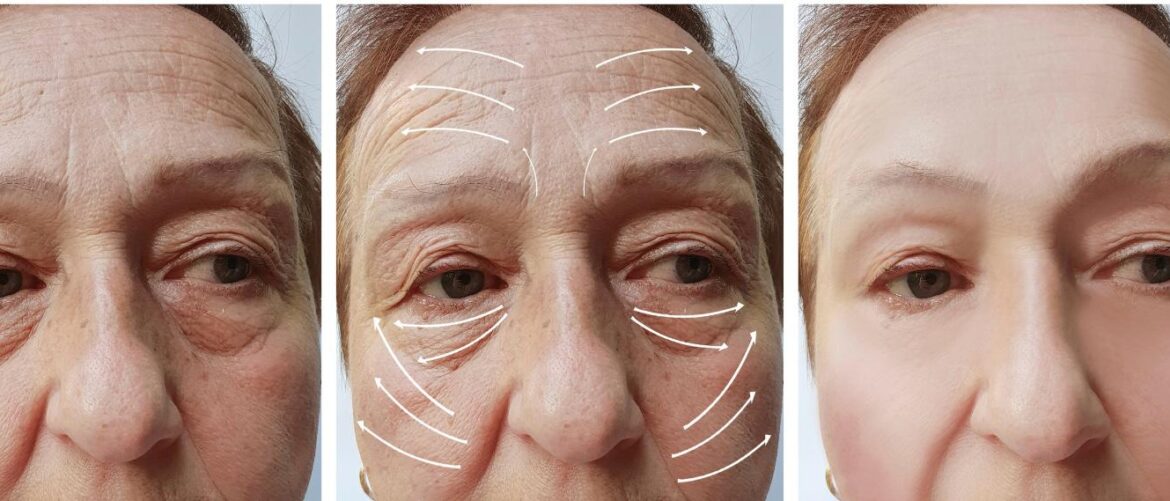
Facial aging is far more complex than the appearance of wrinkles. While many people associate aging with loose skin or fine lines, modern anatomical research has demonstrated that aging is a three-dimensional process involving the facial bones, fat compartments, retaining ligaments, muscles, skin, and the continuous effects of gravity. One of the most recognizable signs of facial aging is the transformation of the youthful inverted facial triangle into an upright facial triangle, resulting in a heavier lower face, diminished cheek projection, and a less defined jawline.
In youth, the face typically exhibits an inverted triangle shape, characterized by fullness in the cheeks and upper face, smooth contours beneath the eyes, well-defined facial proportions, and a narrow, sculpted jawline. These youthful features are maintained by a strong facial skeleton, healthy fat compartments, firm retaining ligaments, abundant collagen and elastin, and well-hydrated skin. As the aging process progresses, these supportive structures gradually deteriorate, causing facial volume to shift downward and altering the overall facial balance.
One of the earliest and most significant changes occurs within the facial skeleton. Contrary to the common belief that facial bones remain unchanged throughout life, research has shown that they undergo continuous remodeling. The orbital openings enlarge, the maxilla gradually retrudes, the mandible loses projection, and the chin becomes less prominent. Bone resorption also occurs around the nose and mouth, reducing the structural support for the overlying soft tissues. As this foundation weakens, the cheeks lose projection, facial contours flatten, and the soft tissues become more susceptible to sagging.
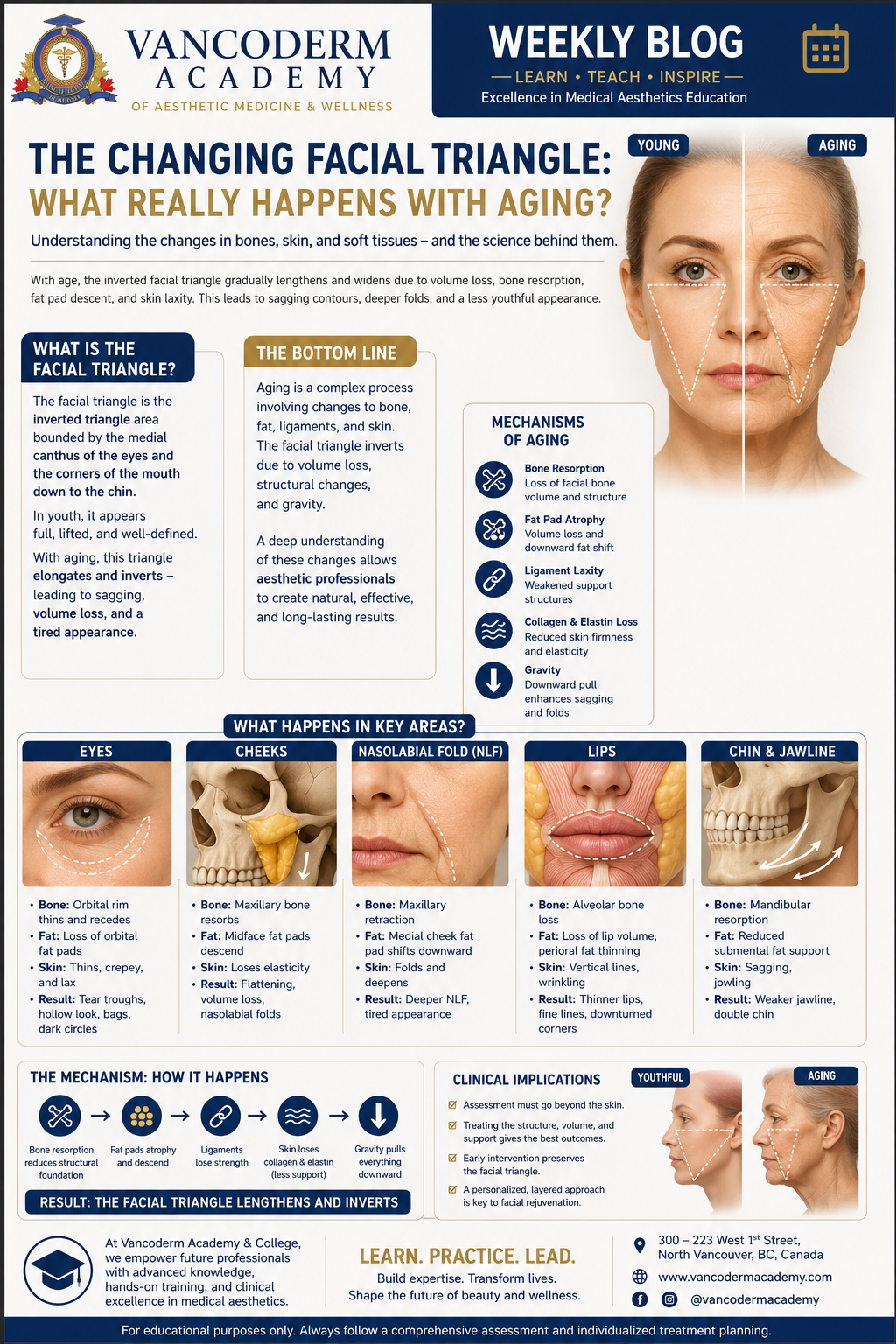 Changes within the facial fat compartments also play a crucial role in facial aging. The face is composed of multiple independent fat pads rather than a single continuous layer of fat. With advancing age, the deep fat compartments that provide youthful facial projection gradually shrink, while superficial fat compartments descend under the influence of gravity. This redistribution of facial fat creates hollowing beneath the eyes and in the temples while simultaneously producing fullness in the lower face, contributing to jowls and heavier facial contours.
Another important factor is the gradual weakening of the retaining ligaments that anchor the facial soft tissues to the underlying bone. These ligaments lose strength and elasticity over time, allowing the fat compartments and skin to descend. As structural support diminishes, gravity accelerates the downward displacement of facial tissues, resulting in more pronounced nasolabial folds, marionette lines, jowls, and neck laxity.
The skin itself also undergoes significant biological changes. Beginning in early adulthood, collagen production declines, elastin fibers become fragmented, and the concentration of hyaluronic acid decreases. The dermis becomes thinner, skin hydration diminishes, and cellular turnover slows. These changes reduce the skin’s firmness and elasticity, making it more susceptible to wrinkles, crepiness, and laxity. While skin aging contributes to the visible signs of aging, it is only one component of a much larger anatomical process.
The delicate tissues surrounding the eyes are often among the first areas to demonstrate aging. Enlargement of the orbital rim, loss of deep orbital fat, thinning of the skin, and weakening of the supporting tissues produce tear trough deformities, hollow eyes, dark circles, crow’s feet, and lower eyelid bags. These changes frequently create a tired appearance even in otherwise healthy individuals.
The midface, particularly the cheeks, experiences significant structural alterations as the maxillary bone retrudes and the deep medial cheek fat compartments lose volume. Simultaneously, the malar fat pad gradually descends. As a result, the cheeks become flatter, facial projection decreases, and the youthful fullness of the midface is replaced by sagging tissues and reduced facial definition.
The nasolabial fold, commonly referred to as the smile line, is often mistakenly considered a simple skin wrinkle. In reality, it develops through a combination of maxillary bone resorption, descent of the cheek fat compartments, weakening of the retaining ligaments, and progressive skin laxity. These structural changes deepen the fold extending from the nose to the corners of the mouth, creating one of the hallmark signs of facial aging.
The lips and perioral region also undergo noticeable anatomical changes. Bone resorption of the maxilla and mandible reduces structural support for the lips, while loss of perioral fat decreases lip volume. At the same time, collagen depletion and repetitive muscle movement contribute to vertical lip lines, thinning of the vermilion border, downward turning of the mouth corners, and elongation of the upper lip. Together, these changes make the lips appear thinner and less youthful.
In the lower face, the mandible gradually loses volume and definition through bone resorption, while soft tissues descend and submental fat accumulates. These changes contribute to the formation of jowls, a less defined jawline, and the appearance of a double chin. The lower third of the face consequently appears broader and heavier, reinforcing the transition from the youthful inverted triangle to the aged upright triangle.
Ultimately, the changing facial triangle is the cumulative result of multiple interconnected processes. Bone resorption weakens the facial framework, fat compartments lose volume and descend, ligaments become lax, collagen and elastin diminish, muscles continuously reshape facial expressions, and gravity acts upon increasingly unsupported tissues. Rather than being a problem of the skin alone, facial aging reflects the gradual deterioration of the entire facial support system.
For medical aesthetic practitioners, understanding these anatomical changes is essential for developing comprehensive and evidence-based treatment plans. Modern facial rejuvenation extends beyond simply treating wrinkles; it requires careful evaluation of facial proportions, skeletal support, fat compartment changes, skin quality, and individual aging patterns. By addressing the underlying structural causes of aging rather than isolated surface concerns, practitioners can achieve more natural, balanced, and long-lasting outcomes.
 At Vancoderm Academy & College of Aesthetic Medicine & Wellness, students are trained to understand facial aging from an evidence-based anatomical perspective. Through advanced education in facial anatomy, aging mechanisms, regenerative medicine, injectable therapies, energy-based technologies, and comprehensive facial assessment, future practitioners develop the knowledge and clinical skills required to deliver safe, effective, and natural-looking aesthetic treatments. Understanding the science behind the changing facial triangle is fundamental to achieving excellence in modern medical aesthetics.