 Vancodermadmin
Global Got Lift Day: The Science, Technology, and Future of Skin Lifting in Modern Medical Aesthetics
 Faramarz Rafie MD / Vancoderm Academy and College (VDA) / Vancoderm Clinic (VDCMed)
Every year on June 5, the aesthetic industry recognizes Global Got Lift Day, a celebration of innovation in skin rejuvenation and non-surgical lifting technologies. The day serves as an opportunity for practitioners, educators, and clients to explore the science behind skin aging and the advanced treatment modalities available to address age-related tissue laxity.
As longevity increases and patients seek effective anti-aging solutions with minimal downtime, skin lifting procedures have become one of the fastest-growing sectors within medical aesthetics. Today’s technologies allow practitioners to target multiple layers of the skin and underlying tissues, producing measurable improvements in firmness, contour, and overall skin quality without the risks and recovery associated with surgery.
At Vancoderm Academy, College, and VDCmed, we believe that successful skin rejuvenation begins with a thorough understanding of skin biology, facial anatomy, tissue aging, and evidence-based treatment protocols. As aesthetic technologies continue to evolve, advanced education remains essential for delivering safe, ethical, and effective patient outcomes.
Understanding Skin Lifting: Definition and Clinical Significance
Skin lifting refers to a group of non-surgical and minimally invasive procedures designed to improve tissue firmness, elasticity, and structural support through stimulation of the body’s natural regenerative mechanisms. These treatments primarily target age-related changes affecting the skin, connective tissue, and underlying facial support structures.
Clinically, skin lifting procedures aim to address:
- Cutaneous laxity
- Fine lines and wrinkles
- Loss of dermal density
- Reduced collagen and elastin production
- Diminished facial contours
- Crepey skin texture
- Early jowl formation
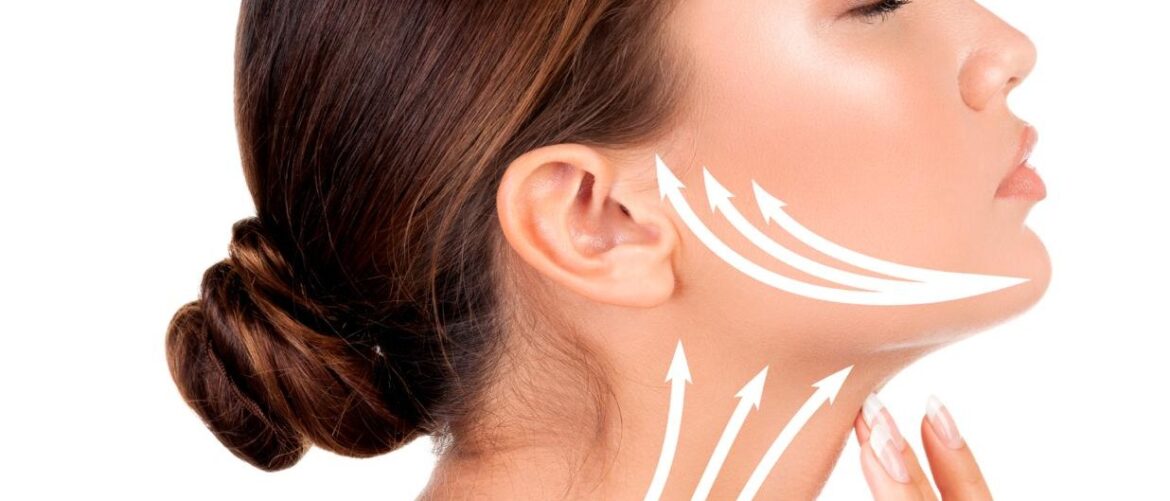
- Neck and submental tissue laxity
Unlike traditional surgical facelifts, modern skin lifting treatments focus on stimulating neocollagenesis (new collagen formation), neoelastogenesis (new elastin production), tissue remodeling, and cellular regeneration while minimizing patient downtime.
The Biology of Skin Aging
To understand skin lifting, it is essential to understand why skin loses firmness over time.
Skin aging is a multifactorial process influenced by intrinsic factors (chronological aging) and extrinsic factors (environmental aging). Beginning as early as the mid-twenties, collagen production declines by approximately 1% annually. Over time, structural proteins responsible for skin integrity gradually deteriorate.
Several biological changes contribute to tissue laxity:
Collagen Degradation
Collagen Types I and III are the primary structural proteins responsible for skin strength and resilience. With age, fibroblast activity decreases, resulting in reduced collagen synthesis and increased collagen fragmentation.
Elastin Breakdown
Elastin fibers provide skin with its ability to stretch and return to its original position. Chronic ultraviolet exposure accelerates elastin degeneration, leading to sagging and loss of recoil.
Hyaluronic Acid Reduction
Natural hyaluronic acid levels decrease over time, reducing the skin’s ability to retain moisture and maintain volume.
Changes in Facial Fat Compartments
Age-related redistribution and atrophy of facial fat pads contribute to volume loss and altered facial contours.
Bone Resorption
The facial skeleton undergoes gradual remodeling and volume reduction, further contributing to tissue descent and facial aging.
Muscular and Ligamentous Changes
Facial retaining ligaments and soft tissues lose structural support, leading to visible sagging in the cheeks, jawline, neck, and periorbital regions.
These cumulative changes create the clinical signs commonly associated with aging skin.
Why Skin Lifting Has Become a Cornerstone of Modern Aesthetics
Modern aesthetic medicine has shifted from simply treating wrinkles to restoring structural support and improving overall tissue quality.
Skin lifting treatments provide several advantages:
- Stimulation of natural collagen production
- Improved skin density and elasticity
- Enhanced facial definition
- Reduction of mild-to-moderate tissue laxity
- Minimal downtime compared with surgery
- Progressive and natural-looking results
- Preventative anti-aging benefits
As a result, many patients now seek collagen-stimulating procedures earlier in life as part of a proactive aging-management strategy.
Evidence-Based Technologies Used for Skin Lifting
Radiofrequency (RF) Skin Tightening
Radiofrequency technology remains one of the most widely utilized modalities in aesthetic medicine.
RF devices generate controlled thermal energy within the dermis and subdermal tissues. Therapeutic heating causes immediate collagen contraction while simultaneously stimulating fibroblasts to produce new collagen and elastin over subsequent months.
Clinical Benefits:
- Improved skin firmness
- Reduction of mild-to-moderate laxity
- Enhanced dermal remodeling
- Facial and body tightening
- Suitable for most Fitzpatrick skin types
Advancements in temperature monitoring and energy delivery have significantly improved treatment safety and predictability.
Radiofrequency Microneedling
RF Microneedling combines mechanical collagen induction with fractional radiofrequency energy delivery.
Insulated or non-insulated needles create controlled microchannels while delivering thermal energy directly into the dermis. This dual mechanism enhances tissue remodeling and collagen production.
Clinical Applications:
- Skin tightening
- Fine lines and wrinkles
- Acne scar revision
- Enlarged pores
- Textural irregularities
- Early skin laxity
RF microneedling is considered one of the most versatile technologies available in modern aesthetic practice.
High-Intensity Focused Ultrasound (HIFU)
HIFU delivers focused ultrasound energy to precise tissue depths, including the superficial musculoaponeurotic system (SMAS), the same foundational layer targeted during surgical facelifts.
Thermal coagulation points created within the tissue initiate wound-healing responses and collagen remodeling.
Clinical Benefits:
- Non-invasive lifting
- Jawline definition
- Neck tightening
- Brow elevation
- Long-term collagen stimulation
Results typically continue to improve over several months as tissue remodeling progresses.
Microcurrent Technology
Microcurrent treatments utilize low-level electrical currents designed to mimic the body’s natural bioelectrical signals.
Although often referred to as a “non-surgical facelift,” microcurrent primarily improves neuromuscular stimulation and circulation rather than producing significant structural lifting.
Benefits include:
- Temporary improvement in facial contour
- Enhanced circulation
- Improved lymphatic drainage
- Muscle re-education
- Preventative aging support
Photobiomodulation (LED Therapy)
Medical-grade LED therapy uses specific wavelengths of light to influence cellular function.
Red and near-infrared wavelengths are particularly valuable for stimulating fibroblast activity, reducing inflammation, and supporting tissue repair.
LED therapy is frequently integrated into comprehensive skin rejuvenation protocols to optimize healing and treatment outcomes.
Sofwave™: Next-Generation Ultrasound Skin Lifting Technology
Among the most significant recent advancements in non-invasive skin rejuvenation is Sofwave™, an FDA-cleared ultrasound technology designed to improve facial wrinkles, fine lines, and skin laxity through collagen regeneration.
Unlike traditional ultrasound-based systems that target deeper tissue layers such as the Superficial Musculoaponeurotic System (SMAS), Sofwave utilizes Synchronous Ultrasound Parallel Beam (SUPERB™) technology to deliver controlled ultrasound energy to the mid-dermis, where collagen production primarily occurs. This precise targeting allows practitioners to stimulate neocollagenesis while minimizing injury to the epidermis and deeper underlying structures.
How Sofwave Works
Sofwave generates multiple parallel ultrasound beams that converge at a precise depth of approximately 1.5 mm within the dermis. The thermal effect raises tissue temperature to an optimal range for collagen denaturation and remodeling, triggering the body’s natural wound-healing response.
This process stimulates:
- Neocollagenesis (new collagen formation)
- Neoelastogenesis (new elastin production)
- Dermal remodeling
- Improved skin elasticity
- Enhanced skin firmness and texture
An integrated cooling mechanism protects the epidermis during treatment, improving patient comfort and safety while allowing effective energy delivery to the target tissue.
Clinical Applications of Sofwave
Sofwave has become increasingly popular for treating:
- Mild to moderate facial skin laxity
- Fine lines and wrinkles
- Eyebrow lifting
- Submental and jawline tightening
- Neck rejuvenation
- Crepey skin texture
- Early signs of aging
The technology is suitable for a broad range of skin types and can be incorporated into comprehensive skin rejuvenation treatment plans.
Advantages of Sofwave Technology
One of the distinguishing characteristics of Sofwave is its ability to produce clinically meaningful improvements with minimal downtime.
Advantages include:
- Non-invasive procedure
- No surgical incisions
- Minimal recovery time
- Comfortable treatment experience
- Safe for various skin phototypes
- Natural-looking results
- Single-treatment protocols in many cases
- Progressive improvement over several months
Most patients experience gradual enhancement of skin firmness and lifting as collagen remodeling continues over a period of approximately 3 to 6 months following treatment.
Sofwave and the Future of Skin Rejuvenation
As aesthetic medicine continues to shift toward collagen-stimulating and regenerative approaches, Sofwave represents an important advancement in energy-based skin rejuvenation. Its ability to precisely target dermal tissue while preserving surrounding structures aligns with the modern goal of achieving natural, long-lasting results through biological tissue regeneration rather than aggressive tissue injury.
For medical aestheticians and skin care professionals, understanding emerging technologies such as Sofwave is essential. As patient demand for non-surgical lifting procedures continues to rise, knowledge of advanced ultrasound technologies will play an increasingly important role in modern aesthetic practice.
The Rise of Regenerative Aesthetics
One of the most significant developments in aesthetic medicine is the emergence of regenerative aesthetics.
Rather than focusing solely on cosmetic correction, regenerative therapies aim to restore biological function and enhance tissue health at the cellular level.
Current regenerative approaches include:
- Platelet-Rich Plasma (PRP)
- Platelet-Rich Fibrin (PRF)
- Growth factor therapies
- Stem-cell-derived signaling technologies
- Exosome research and applications
- Advanced collagen induction procedures
These treatments represent a shift toward stimulating the body’s natural repair mechanisms rather than relying exclusively on external interventions.
Modern Trends Shaping the Future of Skin Lifting
Combination Treatment Protocols
The future of aesthetic medicine increasingly lies in multimodal treatment planning.
Practitioners commonly combine:
- Sofwave
- HIFU and RF
- RF Microneedling and LED
- Microneedling and PRP
- Chemical exfoliation and collagen stimulation
- Regenerative therapies and energy-based devices
By targeting multiple mechanisms of aging simultaneously, combination treatments often achieve superior outcomes.
Artificial Intelligence and Digital Skin Analysis
AI-powered imaging systems are transforming patient consultations and treatment planning.
These technologies can assess:
- Wrinkle severity
- Skin laxity
- Pigmentation patterns
- Vascular changes
- Treatment progress
Data-driven analysis allows for greater personalization and improved patient education.
Precision Energy-Based Devices
Modern devices provide:
- Enhanced treatment customization
- Improved comfort
- Greater safety
- Real-time energy monitoring
- More predictable outcomes
Technological innovation continues to expand the capabilities of non-surgical rejuvenation.
Education: The Foundation of Safe and Effective Skin Lifting
As technologies become more sophisticated, practitioner education becomes increasingly important.
Successful skin lifting treatments require knowledge of:
- Skin histology
- Facial anatomy
- Aging mechanisms
- Energy-based device physics
- Treatment indications and contraindications
- Patient assessment
- Risk management
- Evidence-based treatment planning
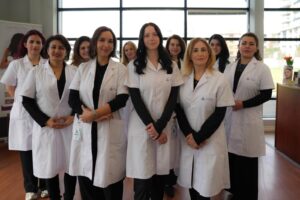 At Vancoderm Academy, students receive comprehensive training in advanced skin rejuvenation technologies, clinical safety protocols, and professional patient care. Our goal is to prepare graduates to meet the growing demand for highly skilled medical aestheticians in today’s evolving aesthetic industry.
Celebrating Global Got Lift™ Day
Global Got Lift™ Day highlights the remarkable progress that has been made in non-surgical skin rejuvenation. Through advancements in radiofrequency, ultrasound, regenerative medicine, artificial intelligence, and collagen-stimulating technologies, aesthetic professionals now have unprecedented tools to improve skin health and combat the visible effects of aging.
As the future of aesthetics continues to evolve toward regenerative and personalized medicine, education, innovation, and evidence-based practice will remain at the heart of successful patient outcomes.
On this Global Got Lift™ Day, we celebrate not only the technologies that are transforming aesthetic medicine but also the practitioners and students committed to advancing the science of skin rejuvenation.