
 Vancodermadmin
Scalp Discoid Lupus Erythematosus (DLE): A Comprehensive Medical Guide to Diagnosis, Trichoscopy, Differential Diagnosis, and Treatment
 Faramarz Rafie MD / Vancoderm Academy and College (VDA) / Vancoderm Clinic (VDCMed)
A Clinical Experience from Vancoderm Academy & College
One of the most rewarding aspects of practicing medical aesthetics and trichology is that every patient presents a unique diagnostic challenge. Hair loss should never be approached with assumptions. Instead, every patient deserves a comprehensive scalp evaluation, careful trichoscopic examination, and a structured differential diagnosis before any treatment is recommended.
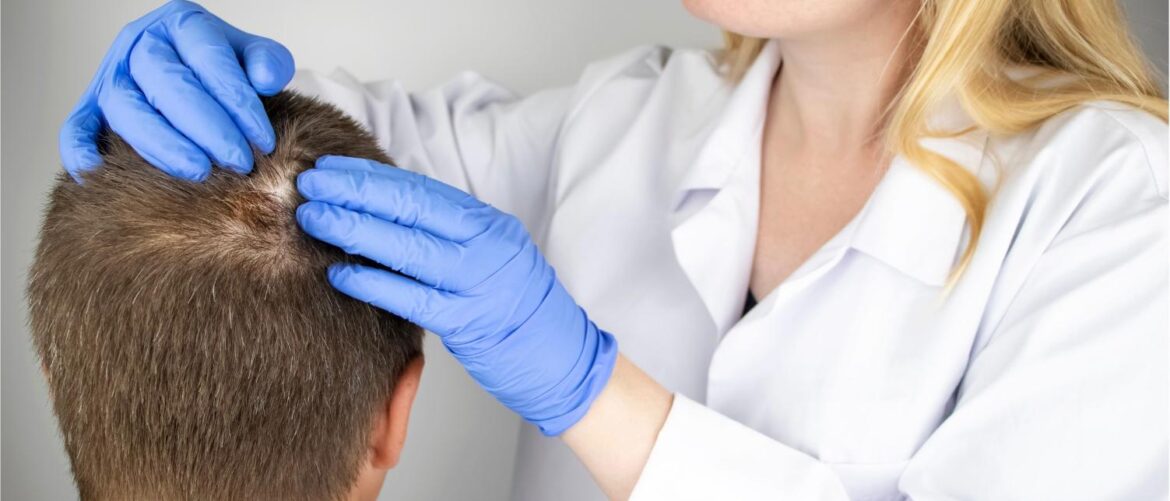
Recently, I evaluated a 30-year-old male with a known history of Male Pattern Hair Loss (Androgenetic Alopecia) who had previously undergone hair transplantation. His primary concern was persistent scalp discomfort associated with visible scarring and recurrent folliculitis within the transplanted area.
At first glance, the clinical presentation appeared consistent with common post-transplant complications. However, trichoscopic examination revealed several additional findings that could not be explained solely by androgenetic alopecia or postoperative folliculitis.
Among the observed features were inflammatory perifollicular changes, areas suggestive of follicular loss, perifollicular scaling, and white scar-like areas that raised suspicion for an underlying inflammatory cicatricial alopecia. These findings prompted consideration of Scalp Discoid Lupus Erythematosus (DLE) as well as Lichen Planopilaris (LPP).
At this stage, no definitive diagnosis has been established. The patient is currently undergoing further medical evaluation, including additional clinical assessment and appropriate investigations, to differentiate between these entities and exclude other causes of inflammatory scarring alopecia.
This experience serves as an important reminder that hair transplantation does not eliminate the possibility of an underlying scalp disease, and postoperative complications may coexist with or even mask autoimmune inflammatory disorders.
As clinicians, our responsibility extends beyond identifying hair loss—we must determine why the patient is losing hair.
The Importance of Differential Diagnosis in Hair and Scalp Disorders
One of the greatest mistakes in clinical practice is treating every patient based solely on their initial diagnosis.
A patient may present with:
- Male Pattern Hair Loss (MPHL)
- Previous hair transplantation
- Folliculitis
- Scalp scarring
While these findings may appear to explain the clinical picture, they should never prevent the clinician from investigating additional pathology.
Inflammatory scarring alopecias frequently coexist with other forms of alopecia.
For example:
- A patient with Androgenetic Alopecia may also develop Discoid Lupus Erythematosus.
- A patient with previous hair transplantation may subsequently develop Lichen Planopilaris.
- Persistent folliculitis following hair transplantation may represent Folliculitis Decalvans, Dissecting Cellulitis, or an autoimmune inflammatory disorder rather than simple bacterial folliculitis.
This is why differential diagnosis remains one of the most important skills in trichology.
Never Assume—Always Investigate
Hair transplantation scars can create diagnostic confusion.
Scar tissue may obscure:
- follicular openings,
- vascular patterns,
- inflammatory activity, and
- perifollicular changes.
Likewise, postoperative folliculitis can mimic early inflammatory cicatricial alopecias.
Without Trichoscopy and careful clinical correlation, practitioners risk overlooking potentially irreversible diseases.
The Value of Trichoscopy
Modern Trichoscopy allows clinicians to identify subtle morphological changes long before permanent scarring becomes obvious.
In this patient, Trichoscopy became the turning point.
Rather than simply documenting postoperative folliculitis, the examination revealed features that expanded the differential diagnosis and prompted referral for further medical investigation.
This illustrates an essential principle taught at Vancoderm Academy & College:
Trichoscopy should not be used merely to confirm a suspected diagnosis—it should be used to challenge it.
The best clinicians do not search for evidence supporting their first impression; they actively look for findings that may prove it wrong.
Clinical Message for Medical Aesthetic Practitioners
Medical aesthetic professionals frequently encounter patients seeking treatments such as:
- Platelet-Rich Plasma (PRP)
- Microneedling
- Exosome therapy
- Low-Level Laser Therapy (LLLT)
- Hair mesotherapy
- Radiofrequency treatments
However, none of these procedures should be initiated until inflammatory scalp disorders have been excluded.
Treating an undiagnosed cicatricial alopecia with regenerative procedures may delay appropriate medical therapy and, in some cases, worsen disease activity through additional scalp trauma.
The correct treatment is not always the newest technology—it is the treatment based on the correct diagnosis.
Our Clinical Philosophy at Vancoderm Academy & College
At Vancoderm Academy & College, we emphasize that successful hair restoration begins with diagnosis—not treatment.
Students are trained to perform comprehensive scalp consultations using a structured diagnostic approach that includes:
- Detailed patient history
- Clinical scalp examination
- Digital scalp imaging
- Trichoscopy
- Hair density assessment
- Evaluation of hair shaft abnormalities
- Recognition of inflammatory scalp disorders
- Development of a comprehensive differential diagnosis
- Identification of contraindications before performing aesthetic procedures
- Appropriate referral to dermatologists or other healthcare providers when medical conditions are suspected
This diagnostic mindset helps ensure patient safety and supports evidence-based clinical decision-making.
Take-Home Message
Every patient has a story that extends beyond hair loss. A diagnosis of androgenetic alopecia or a history of hair transplantation should never close the door to further investigation. Persistent inflammation, scarring, folliculitis, or atypical trichoscopic findings warrant a broader differential diagnosis that includes disorders such as Discoid Lupus Erythematosus (DLE), Lichen Planopilaris (LPP), Folliculitis Decalvans, and other causes of cicatricial alopecia.
The most valuable instrument in hair restoration is not a laser, PRP, or transplantation device—it is the clinician’s ability to recognize when the clinical picture does not fit the expected diagnosis. That commitment to critical thinking and comprehensive evaluation is the foundation of safe, ethical, and effective patient care.
Understanding Scarring Alopecia for Medical Aesthetic Professionals and Trichologists
Scalp Discoid Lupus Erythematosus (DLE)
Hair loss is one of the most common reasons patients seek consultation in dermatology clinics, trichology practices, and medical aesthetic clinics. While many forms of alopecia are non-scarring and potentially reversible, some inflammatory conditions permanently destroy the hair follicle. One of the most clinically significant of these disorders is Scalp Discoid Lupus Erythematosus (DLE).
Discoid Lupus Erythematosus is the most common subtype of Chronic Cutaneous Lupus Erythematosus (CCLE) and is a chronic autoimmune inflammatory disease primarily affecting the skin and hair follicles. When the scalp is involved, persistent inflammation gradually destroys the follicular stem cells responsible for hair regeneration, resulting in primary cicatricial (scarring) alopecia. Once scarring develops, hair follicles cannot regenerate, making early diagnosis essential.
Unlike androgenetic alopecia, telogen effluvium, or alopecia areata, DLE causes irreversible follicular damage. Delayed diagnosis often results in permanent hair loss, scalp atrophy, dyspigmentation, and fibrosis. This highlights the importance of recognizing early inflammatory signs before irreversible structural changes occur.
For medical aesthetic practitioners, trichologists, and hair restoration specialists, understanding the clinical presentation of DLE is essential. Patients frequently present with complaints of hair thinning, scalp sensitivity, or persistent scaling before they receive a definitive diagnosis. A practitioner trained in scalp assessment and Trichoscopy can recognize suspicious findings early and refer patients for appropriate dermatologic management before permanent scarring develops.
At Vancoderm Academy & College, students in the Medical Aesthetics Diploma Program receive advanced education in hair biology, scalp pathology, Trichoscopy, differential diagnosis of alopecia, and evidence-based treatment planning. Understanding inflammatory scalp diseases enables future practitioners to identify contraindications to cosmetic procedures and contribute to multidisciplinary patient care.
Definition
Scalp Discoid Lupus Erythematosus is a chronic autoimmune inflammatory disorder affecting the epidermis, dermis, dermoepidermal junction, and pilosebaceous unit. The disease selectively targets hair follicles through an abnormal immune response that results in chronic inflammation, destruction of sebaceous glands, perifollicular fibrosis, and eventual replacement of hair follicles with dense scar tissue.
The hallmark feature of DLE is irreversible destruction of follicular stem cells located within the bulge region of the hair follicle. Because these stem cells are responsible for producing new hair shafts, their loss leads to permanent cicatricial alopecia.
Although DLE primarily affects the skin, approximately 5–20% of patients may later develop systemic lupus erythematosus (SLE). Therefore, recognition of cutaneous disease also has implications for systemic medical evaluation.
Pathophysiology
The exact cause of Discoid Lupus Erythematosus remains incompletely understood; however, current evidence indicates that disease development results from an interaction between genetic susceptibility, environmental triggers, ultraviolet radiation, and immune dysregulation.
In genetically predisposed individuals, ultraviolet light, cigarette smoking, infections, certain medications, or local trauma may trigger activation of the innate immune system. Damaged keratinocytes release nuclear antigens that stimulate plasmacytoid dendritic cells to produce large amounts of Type I interferons, particularly interferon-alpha. This initiates recruitment of CD4+ helper T lymphocytes, CD8+ cytotoxic T cells, macrophages, and B lymphocytes into the skin surrounding hair follicles.
Persistent immune activation causes chronic interface dermatitis characterized by destruction of basal keratinocytes, basement membrane thickening, follicular hyperkeratosis, and dense perifollicular lymphocytic infiltrates. Over time, inflammation extends into the follicular epithelium, resulting in destruction of sebaceous glands and permanent damage to follicular stem cells.
The body’s normal wound-healing response subsequently replaces destroyed follicles with dense collagen fibers. This fibrotic process permanently eliminates follicular openings, producing irreversible scarring alopecia.
Epidemiology
Discoid Lupus Erythematosus accounts for approximately 70–80% of all cases of Chronic Cutaneous Lupus Erythematosus and remains one of the most important causes of primary lymphocytic cicatricial alopecia worldwide.
The disease occurs approximately three times more frequently in women than in men, with the highest incidence between 20 and 50 years of age. Although DLE may affect individuals of any ethnicity, pigmentary changes are often more pronounced in patients with darker Fitzpatrick skin types.
The scalp is among the most commonly involved anatomical locations, followed by the face, ears, and neck. Studies estimate that nearly 60% of patients with DLE develop scalp involvement during the course of their disease.
Etiology and Risk Factors
The development of DLE is multifactorial. No single factor is responsible for disease onset; rather, several interacting mechanisms increase susceptibility.
Important risk factors include a family history of autoimmune disease, genetic predisposition, ultraviolet radiation exposure, cigarette smoking, hormonal influences, viral infections, chronic psychological stress, and mechanical trauma to the scalp. Certain medications may also induce lupus-like skin reactions in susceptible individuals.
Smoking has consistently been associated with increased disease severity, poorer response to antimalarial therapy, and higher recurrence rates.
Clinical Presentation
The onset of scalp DLE is usually gradual. Patients often report subtle scalp symptoms months before visible hair loss develops.
Early lesions begin as erythematous inflammatory plaques accompanied by follicular hyperkeratosis and fine adherent scaling. Mild burning, tenderness, or itching may be present, although some patients remain asymptomatic.
As inflammation progresses, follicular plugging becomes more prominent. Hair density gradually decreases, and lesions enlarge centrifugally. Pigmentary changes become evident, with peripheral hyperpigmentation surrounding central hypopigmented atrophic areas.
In advanced disease, the inflammatory process subsides, leaving smooth white scar tissue devoid of follicular openings. At this stage, permanent alopecia has developed, and hair regrowth is no longer possible.
Chief Complaints
Patients commonly seek medical attention because of slowly progressive patchy hair loss accompanied by persistent scalp redness and scaling. Many describe a burning sensation, increased scalp sensitivity, tenderness while brushing their hair, or chronic itching. Others become concerned about enlarging bald patches that fail to regrow despite using over-the-counter hair growth products.
Some patients initially believe they have dandruff because thick adherent scales are present. Unfortunately, treatment with cosmetic shampoos alone does not resolve the underlying autoimmune inflammation.
Clinical Examination
Careful scalp examination reveals sharply demarcated erythematous plaques covered by adherent hyperkeratotic scales. Follicular plugging is often visible with the naked eye. Active lesions demonstrate perifollicular erythema and scaling, whereas chronic lesions exhibit smooth ivory-white scar tissue lacking visible follicular openings.
Central atrophy, telangiectasia, dyspigmentation, and permanent alopecia are characteristic findings in longstanding disease.
The scalp should always be examined systematically using magnification or dermoscopy to identify subtle inflammatory changes before fibrosis develops.
Trichoscopy
Trichoscopy has become one of the most valuable non-invasive diagnostic tools in modern trichology. It allows clinicians to visualize follicular architecture, vascular patterns, scaling, pigmentation, and inflammatory changes that are invisible to the naked eye.
In early active DLE, trichoscopy typically demonstrates perifollicular scaling, keratotic follicular plugs, perifollicular erythema, enlarged arborizing blood vessels, scattered red dots representing dilated capillaries, yellow dots corresponding to dilated follicular ostia, and blue-gray pigmentation resulting from dermal melanophages.
As disease progresses, the trichoscopic pattern changes dramatically. White structureless fibrotic areas become increasingly prominent, reflecting irreversible collagen deposition. Follicular openings disappear completely, sebaceous gland structures are absent, and only scattered residual terminal hairs remain within scarred plaques.
Loss of follicular ostia combined with white scar-like areas is considered one of the most important trichoscopic indicators of cicatricial alopecia.
Differential Diagnosis
Because several inflammatory scalp disorders produce patchy alopecia, distinguishing DLE from other conditions is critical.
Lichen Planopilaris is another primary lymphocytic cicatricial alopecia. Unlike DLE, it demonstrates prominent perifollicular tubular scales, violaceous perifollicular discoloration, and perifollicular hyperkeratosis without the characteristic follicular plugs and dyspigmentation seen in lupus.
Frontal Fibrosing Alopecia primarily affects postmenopausal women and produces progressive recession of the frontal hairline with eyebrow loss. Trichoscopy commonly demonstrates isolated “lonely hairs” anterior to the hairline and perifollicular erythema.
Central Centrifugal Cicatricial Alopecia (CCCA) typically begins on the vertex scalp and spreads centrifugally. Peripilar white-gray halos and central scalp involvement distinguish it from DLE.
Folliculitis Decalvans presents with painful pustules, crusting, purulent discharge, and tufted hairs. Bacterial infection plays a major role, whereas DLE is autoimmune in origin.
Alopecia Areata is a non-scarring autoimmune alopecia characterized by smooth bald patches with preserved follicular openings. Yellow dots, black dots, broken hairs, and exclamation-mark hairs are typical trichoscopic findings.
Tinea Capitis is caused by dermatophyte infection and often presents with broken hairs, comma hairs, corkscrew hairs, diffuse scaling, and occipital lymphadenopathy, particularly in children.
Scalp Psoriasis produces thick silvery plaques with diffuse erythema and twisted capillary loops but lacks follicular destruction.
Seborrheic Dermatitis causes diffuse greasy scales and mild erythema without permanent follicular loss.
Diagnostic Evaluation
Accurate diagnosis requires integration of clinical findings, trichoscopy, histopathology, and laboratory investigations when indicated.
A comprehensive evaluation begins with a detailed medical history, including duration of hair loss, associated symptoms, family history of autoimmune disease, medication use, smoking history, and photosensitivity.
Physical examination is followed by standardized scalp photography and trichoscopy. When diagnosis remains uncertain, a 4-mm punch biopsy should be obtained from the active inflammatory border rather than the center of an established scar. Histopathological examination typically reveals interface dermatitis, follicular plugging, basement membrane thickening, dense perifollicular lymphocytic infiltrates, sebaceous gland destruction, dermal mucin deposition, and concentric fibrosis.
Patients with clinical features suggestive of systemic lupus may require laboratory investigations such as antinuclear antibody (ANA), anti-double stranded DNA antibodies, complement levels, erythrocyte sedimentation rate, and complete blood count.
Treatment
The principal goal of treatment is suppression of inflammation before irreversible follicular destruction occurs.
High-potency topical corticosteroids remain first-line therapy for localized disease and effectively reduce erythema, scaling, and inflammatory activity. Calcineurin inhibitors such as tacrolimus or pimecrolimus may be used in steroid-sensitive areas or as maintenance therapy.
Localized active plaques often respond well to intralesional triamcinolone acetonide injections administered every four to six weeks.
Patients with extensive scalp involvement generally require systemic therapy. Hydroxychloroquine remains the first-line systemic medication because of its immunomodulatory effects and favorable long-term safety profile when appropriately monitored. Refractory disease may require methotrexate, mycophenolate mofetil, azathioprine, systemic corticosteroids, or biologic agents under dermatologic supervision.
Treatment response should be monitored clinically and by serial trichoscopy to assess reduction of perifollicular inflammation and stabilization of hair loss.
Medical Aesthetic Procedures
Medical aesthetic practitioners must recognize that active inflammatory scalp disease represents an absolute contraindication for many hair restoration procedures.
Microneedling, radiofrequency Microneedling, platelet-rich plasma therapy, fractional laser resurfacing, aggressive scalp massage, and hair transplantation should not be performed during active DLE because tissue injury may trigger the Koebner phenomenon and accelerate follicular destruction.
Once inflammation has been completely inactive for one to two years and disease stability has been confirmed by a dermatologist, selected restorative procedures may be considered. Hair transplantation can improve cosmetic appearance in carefully selected patients with stable disease, although graft survival may be lower than in non-scarring alopecias. Scalp micropigmentation and cosmetic camouflage techniques also provide aesthetic improvement in extensive scarring.
Low-Level Laser Therapy (LLLT) has been investigated as an adjunctive treatment, but current evidence remains limited and should not replace established medical therapy.
Prognosis
The prognosis of scalp DLE depends almost entirely on the timing of diagnosis and treatment. Patients treated during the inflammatory stage often retain much of their existing hair because follicular stem cells remain intact. Once fibrosis develops and follicular openings disappear, permanent hair loss has occurred, and no currently available therapy can regenerate destroyed follicles.
Regular follow-up with dermatologists, serial trichoscopic examinations, and early adjustment of therapy are essential to prevent disease progression.
Conclusion
Scalp Discoid Lupus Erythematosus remains one of the most important causes of permanent scarring alopecia encountered in dermatology and trichology. Its insidious onset often delays diagnosis until irreversible follicular destruction has already occurred. For this reason, practitioners working in medical aesthetics and hair restoration must be able to recognize early inflammatory signs, interpret trichoscopic findings, understand the differential diagnosis, and identify contraindications to aesthetic procedures.
 At Vancoderm Academy & College, our Medical Aesthetics Diploma curriculum integrates advanced scalp analysis, Trichoscopy, hair biology, inflammatory scalp disorders, and evidence-based treatment planning. This comprehensive medical education equips graduates with the knowledge to recognize complex hair and scalp diseases, make appropriate referrals, and contribute safely and effectively to multidisciplinary patient care while maintaining the highest standards of clinical practice.