
 Vancodermadmin
The Role of Pulse Duration in Laser Hair Reduction: Optimizing Clinical Outcomes and Patient Safety
Vancoderm Academy and College | Weekly Medical Aesthetics Education
 Faramarz Rafie MD / Vancoderm Academy and College [VDA] / Vancoderm Clinic [VDCmed]
Laser hair reduction is a sophisticated energy-based medical aesthetic procedure that requires more than simply selecting a wavelength and pressing the treatment button. Successful treatment depends on the interaction of multiple laser parameters, including wavelength, fluence, spot size, pulse duration, repetition rate, cooling, skin phototype, and hair characteristics.
Among these parameters, pulse duration—or pulse width—is particularly important because it determines how quickly laser energy is delivered to the target tissue. Selecting an inappropriate pulse duration may compromise follicular heating, reduce treatment efficacy, or increase unwanted thermal injury to the epidermis.
For medical aestheticians and laser practitioners, understanding the relationship between pulse duration, thermal relaxation time, selective photothermolysis, and tissue response is fundamental to safe and effective laser hair reduction.
What Is Pulse Duration in Laser Hair Reduction?
Pulse duration is the length of time during which laser energy is delivered during an individual pulse. It is commonly expressed in milliseconds (ms).
In laser hair reduction, the objective is to deliver sufficient optical energy to melanin-containing structures associated with the hair follicle and convert that energy into controlled thermal injury.
The clinical goal is not simply to generate heat. The goal is to generate adequate, localized follicular heating while minimizing unnecessary thermal injury to surrounding tissue.
This is the foundation of parameter selection in medical cosmetic laser treatments.
The Medical Science Behind Laser Hair Reduction
Laser hair reduction is based on the principle of selective photothermolysis.
Melanin acts as the principal endogenous chromophore for commonly used hair-reduction laser systems. When laser energy is absorbed by melanin, optical energy is converted into heat.
This thermal effect can damage critical follicular structures involved in hair growth, including melanized follicular components and areas associated with follicular regeneration.
The fundamental treatment sequence can therefore be represented as:
Laser energy → melanin absorption → photothermal conversion → controlled follicular thermal injury → progressive reduction in hair growth
The challenge for the practitioner is to maximize the difference between target heating and non-target heating.
This is where pulse duration becomes clinically important.
 Thermal Relaxation Time and Pulse Duration
One of the most important concepts in laser physics is thermal relaxation time (TRT).
Thermal relaxation time refers to the approximate time required for a heated target to dissipate a substantial portion of its thermal energy into the surrounding tissue.
The thermal behavior of a structure is influenced by its size and composition. Larger structures generally require more time to cool than smaller structures.
In laser hair reduction, the practitioner is concerned with the thermal behavior of the hair shaft and follicular structures while also protecting the epidermis.
The principle of selective photothermolysis indicates that pulse duration should be appropriately related to the thermal characteristics of the intended target.
However, TRT should not be interpreted as a simple formula in which the practitioner selects one universally correct pulse duration for every patient.
Clinical laser treatment is considerably more complex.
Pulse duration must be interpreted together with wavelength, fluence, spot size, cooling, skin pigmentation, hair diameter, and the specific laser platform being used.
Why Hair Diameter Matters
Hair diameter is an important variable in laser hair reduction.
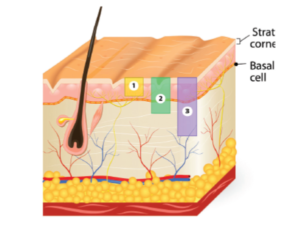
Coarse terminal hair generally contains more melanin and presents a larger pigmented target than fine hair. This influences both laser absorption and the subsequent movement of heat within the follicular structure.
Fine hair, by comparison, presents a smaller target and may contain less melanin.
 Therefore, the same laser settings should not automatically be applied to:
- Coarse terminal hair
- Medium-caliber hair
- Fine hair
- Different anatomical regions
- Different skin phototypes
This is one reason why individualized treatment planning is essential in professional laser hair reduction.
Short Pulse Duration Versus Long Pulse Duration
The choice between shorter and longer pulse durations should be based on the characteristics of the target and the overall treatment protocol.
Shorter Pulse Duration
A shorter pulse delivers the selected energy over a shorter period, resulting in a more rapid rise in tissue temperature.
This can be advantageous when the treatment objective requires rapid heating of an appropriate target.
However, a shorter pulse is not inherently safer or more effective.
If the pulse duration, fluence, wavelength, and cooling are poorly matched to the patient’s skin and hair characteristics, excessive thermal stress may occur.
Potential complications can include:
- Epidermal injury
- Burns
- Blistering
- Crusting
- Post-inflammatory hyperpigmentation
- Post-inflammatory hypopigmentation
- Prolonged erythema
Longer Pulse Duration
A longer pulse distributes the energy over a greater period.
This modifies the rate of temperature increase and the pattern of heat diffusion.
Longer pulses may be appropriate for particular treatment protocols and patient characteristics, but increasing pulse duration should not automatically be viewed as a safety adjustment.
If energy remains in the tissue for too long relative to the target’s thermal characteristics, heat can diffuse into surrounding tissue and potentially reduce treatment selectivity.
Therefore:
Shorter does not always mean better, and longer does not always mean safer.
The correct pulse duration is the one that forms part of an appropriately balanced treatment protocol.
Pulse Duration, Fluence, and Power Density
One of the most important concepts for students learning medical cosmetic laser technology is that laser parameters cannot be evaluated independently.
Fluence describes the amount of energy delivered per unit area and is commonly expressed in:
J/cm²
Pulse duration describes the time over which that energy is delivered.
Conceptually:
Shorter pulse duration + same fluence = energy delivered more rapidly
Longer pulse duration + same fluence = energy delivered over a longer period
Consequently, two treatments using identical fluence may produce different tissue responses if their pulse durations differ.
This demonstrates why simply increasing or decreasing fluence without understanding pulse duration can lead to inappropriate parameter selection.
The Relationship Between Wavelength and Pulse Duration
Laser wavelength determines the interaction between the laser and tissue chromophores.
Common wavelengths used in laser hair reduction include:
- 755 nm Alexandrite
- 800–810 nm diode
- 1064 nm Nd
These wavelengths have different absorption characteristics and penetration profiles.
Melanin absorption is particularly relevant because both the hair follicle and epidermis may contain melanin.
For patients with higher levels of epidermal melanin, appropriate wavelength selection, cooling, fluence, pulse duration, and clinical technique become especially important.
The 1064 nm Nd laser is commonly used for hair reduction in darker skin phototypes because its interaction with epidermal melanin is lower than that of shorter wavelengths, although appropriate clinical assessment and device-specific protocols remain essential.
Skin Phototype Must Influence Parameter Selection
A medically oriented laser consultation should never focus exclusively on the hair.
The practitioner must also evaluate the patient’s skin.
Important considerations include:
- Fitzpatrick skin phototype
- Recent ultraviolet exposure
- Tanning
- Use of self-tanning products
- Baseline pigmentation
- History of post-inflammatory hyperpigmentation
- Previous laser treatments
- Current medications
- Relevant contraindications
- Treatment area
The epidermis is a competing chromophore.
When epidermal melanin absorbs excessive laser energy, the risk of thermal injury increases.
Therefore, the practitioner must establish an appropriate therapeutic window between sufficient follicular heating and acceptable epidermal safety.
The Importance of Cooling
Cooling is an integral component of many modern laser hair-reduction systems.
Depending on the device, cooling may include:
- Cryogen spray
- Contact cooling
- Air cooling
- Integrated cooling systems
Cooling helps reduce epidermal temperature and may improve patient comfort.
However, cooling should not be considered a substitute for appropriate parameter selection.
The correct laser parameter plus appropriate cooling is safer than an inappropriate parameter compensated for by excessive cooling.
This is why professional laser training must integrate laser physics, skin anatomy, tissue interaction, parameter selection, and safety protocols rather than teaching isolated machine settings.
Clinical Endpoints: What Should the Practitioner Observe?
Laser hair reduction should be guided by an appropriate clinical endpoint rather than by numerical settings alone.
Depending on the device and treatment protocol, an appropriate acute response may include:
- Perifollicular erythema
- Perifollicular edema
- Mild, expected treatment discomfort
- Appropriate transient warmth
These responses must be interpreted within the context of the patient’s skin type, hair characteristics, wavelength, fluence, pulse duration, cooling, and treatment area.
More severe responses are concerning and should not be considered desirable endpoints.
These include:
- Blistering
- Significant epidermal injury
- Charring
- Severe persistent pain
- Extensive crusting
- Unexpected pigmentary alteration
Recognizing these differences is an essential component of laser safety training.
Why There Is No Universal Pulse Duration
One of the most common misconceptions in laser hair reduction is that there is one ideal pulse duration that can be used for every patient.
There is not.
The appropriate setting depends on:
Patient + Hair + Skin + Wavelength + Fluence + Spot Size + Pulse Duration + Cooling + Device
Different laser platforms also have different pulse structures, beam profiles, cooling technologies, and manufacturer-recommended protocols.
Therefore, a pulse duration used successfully with one device should not automatically be transferred to another laser system.
Practitioners should follow the specific device manufacturer’s Instructions for Use (IFU) and established clinical protocols.
Common Clinical Errors in Pulse-Duration Selection
1. Treating Every Patient With the Same Settings
Patient-specific factors must be evaluated before treatment.
2. Assuming More Energy Produces Better Results
Higher fluence does not automatically translate into better clinical outcomes.
The objective is controlled follicular injury, not maximum tissue heating.
3. Selecting Pulse Duration Without Considering Hair Diameter
Coarse terminal hair and fine hair have different optical and thermal characteristics.
4. Ignoring Skin Phototype
Epidermal melanin can significantly influence treatment safety.
5. Changing Several Parameters Simultaneously
If wavelength, fluence, pulse duration, spot size, and cooling are changed simultaneously, it becomes difficult to determine which variable produced the observed response.
6. Treating Preset Parameters as Universal
Preset values are not a replacement for clinical assessment.
A Systematic Approach to Laser Hair Reduction
A medically oriented treatment approach should follow a structured process.
1. Patient Assessment
Evaluate the patient’s:
- Medical history
- Skin phototype
- Hair color and diameter
- Treatment area
- Tanning history
- Previous treatments
- Contraindications
- Risk factors for pigmentary complications
2. Select the Appropriate Laser Platform
The wavelength and device should be selected according to the patient’s characteristics and treatment objective.
3. Determine Appropriate Parameters
Consider:
- Wavelength
- Fluence
- Spot size
- Pulse duration
- Repetition rate
- Cooling
4. Perform a Test Spot When Clinically Appropriate
A test spot can help assess tissue response and treatment tolerance according to the device protocol and clinical circumstances.
5. Evaluate the Clinical Endpoint
Observe the skin response rather than relying exclusively on numerical parameters.
6. Document the Treatment
Clinical documentation should include relevant treatment parameters and patient response.
7. Provide Appropriate Aftercare
Patients should receive clear instructions regarding:
- Sun protection
- Skin care
- Avoidance of unnecessary irritation
- Expected post-treatment responses
- Warning signs requiring clinical attention
Why This Matters in Medical Aesthetics Education
Laser hair reduction is not simply a cosmetic procedure performed according to a preset machine protocol.
It involves the application of:
Laser physics + tissue optics + dermatologic anatomy + thermal biology + clinical assessment + patient safety
This is why comprehensive medical aesthetics training should teach students to understand why a parameter is selected rather than simply memorize a numerical setting.
 At Vancoderm Academy, laser education is integrated into a broader medical aesthetics curriculum that includes skin anatomy, laser safety, laser hair reduction, cosmetic laser technologies, consultation, treatment planning, and hands-on clinical practice. The Academy’s Medical Aesthetician Diploma also incorporates practical training with real models and medical-grade technologies.
Vancoderm Academy also offers dedicated training in Hair Reduction Laser Technology, with instruction in skin assessment, laser parameter selection, treatment protocols, and pre- and post-treatment care.