 Vancodermadmin
Anisotrichosis: Hair Shaft Diameter Variability as a Trichoscopic Marker of Follicular Miniaturization
Faramarz Rafie MD / Vancoderm Academy and College [VDA] / Vancoderm Clinic [VDCmed]
 Build a Professional Career in Trichology
For individuals interested in developing a professional career in hair and scalp health, trichology, and hair-care consulting, Vancoderm Academy and College offers an excellent opportunity to obtain specialized education in this growing field. The Trichologist (Hair Care Consultant) Certificate Program at Vancoderm Academy is a PTIRU-approved certificate program in British Columbia, Canada, providing focused education in the assessment of hair and scalp conditions, professional consultation, treatment planning, and appropriate hair-care management. Vancoderm Academy is a designated institution in British Columbia and is approved by the Private Training Institutions Regulatory Unit (PTIRU) under the provincial regulatory framework.
The program is designed for individuals who want to develop specialized knowledge in Trichoscopy, hair and scalp assessment, hair-shaft disorders, common forms of hair loss, scalp conditions, and professional hair-care management. Graduates receive a Vancoderm Academy Trichologist (Hair Care Consultant) Certificate and are prepared for professional opportunities in settings such as hair clinics, medical aesthetics clinics, wellness centres, and beauty practices.
For applicants seeking an internationally oriented career, training in Canada can provide a strong educational foundation and a valuable professional credential to support career development in different markets. However, requirements for practicing as a trichologist vary from country to country. Trichology is not a uniformly regulated profession worldwide, and graduates should verify the licensing, registration, credential-recognition, and scope-of-practice requirements of the jurisdiction in which they intend to work. PTIRU approval confirms that the program is approved within British Columbia’s private-training regulatory framework; it does not by itself constitute an international professional license.
Why Study Trichology at Vancoderm Academy and College?
The program offers an opportunity to combine scientific knowledge, clinical observation, and practical hair-and-scalp assessment skills. For individuals passionate about hair health and interested in working alongside medical, aesthetic, wellness, or hair-care professionals, specialized trichology education can provide a valuable foundation for building a professional career in Canada or exploring opportunities internationally.
Learn the science behind hair and scalp health. Develop professional assessment skills. Build your future in trichology.
Vancoderm Academy and College | Weekly Medical Aesthetics & Trichology Education
Hair loss is not always first recognized as a reduction in the number of hairs. In many patients, one of the earliest structural changes occurs at the level of the hair follicle, where terminal hairs progressively decrease in calibre.
This phenomenon can be observed clinically and, more accurately, through trichoscopy as a variation in hair-shaft diameter known as anisotrichosis.
Anisotrichosis is particularly relevant in the evaluation of androgenetic alopecia (AGA), also known as pattern hair loss, where progressive follicular miniaturization produces hairs of different diameters within the same scalp region.
Understanding this finding is essential for practitioners involved in hair and scalp assessment because it can help identify early follicular miniaturization before clinically obvious hair-density reduction becomes pronounced.
 What Is Anisotrichosis?
Anisotrichosis refers to significant variation in the diameter or calibre of individual hair shafts within a defined area of the scalp.
A healthy scalp normally contains hairs with some degree of natural variation. However, when there is marked heterogeneity, the scalp may contain a combination of:
- Terminal hairs with normal calibre
- Intermediate-calibre hairs
- Thin, miniaturized hairs
- Vellus-like hairs
The coexistence of hairs with substantially different diameters is particularly characteristic of follicular miniaturization.
In androgenetic alopecia, the progressive and asynchronous miniaturization of susceptible follicles produces this heterogeneity. Trichoscopic studies consistently identify hair-diameter variability as a major diagnostic feature of AGA.
Anisotrichosis Is a Finding, Not a Diagnosis
This distinction is clinically important.
Anisotrichosis does not itself represent a disease. It is a morphological finding that must be interpreted within the patient’s clinical context.
The same patient may have anisotrichosis because of:
- Androgenetic alopecia
- Follicular miniaturization
- Certain hair-shaft disorders
- Other forms of hair pathology
- Normal biological variation, when mild
Therefore, identifying anisotrichosis should prompt further assessment rather than an automatic diagnosis of androgenetic alopecia.
The Relationship Between Anisotrichosis and Androgenetic Alopecia
The strongest clinical association is with androgenetic alopecia.
AGA develops through genetically determined susceptibility of hair follicles to androgen-mediated miniaturization. In susceptible follicles, the growth cycle becomes progressively altered and terminal hairs are transformed into increasingly smaller-calibre hairs.
The result is a characteristic mixture of:
Terminal hair → intermediate hair → miniaturized hair → vellus-like hair
This process does not occur simultaneously in every follicle. Consequently, hairs of different diameters coexist within the affected region, producing anisotrichosis.
A systematic review of 34 studies involving 2,860 patients found hair-diameter variability in approximately 94% of patients with AGA, making it one of the most consistently observed trichoscopic findings.
Why Does Follicular Miniaturization Occur?
In androgenetic alopecia, the pathophysiology involves a combination of genetic susceptibility and androgen signalling.
Testosterone can be converted to dihydrotestosterone (DHT) by the enzyme 5-alpha-reductase. In genetically susceptible follicles, androgen signalling contributes to progressive miniaturization.
The affected follicle produces:
- A smaller hair shaft
- A shorter anagen phase
- A progressively shorter hair
- Reduced pigmentation in some cases
- An increasing proportion of vellus-like hairs
Because individual follicles undergo miniaturization at different rates, the scalp develops considerable variation in hair diameter.
This is the biological basis for anisotrichosis in AGA.
How Is Anisotrichosis Identified?
1. Clinical Examination
A complete hair-loss assessment begins with a detailed history and physical examination.
Important questions include:
- When did the patient first notice the change?
- Is the process progressive?
- Is there increased shedding?
- Is there a family history of pattern hair loss?
- Has the patient experienced recent illness, surgery, major stress, or weight change?
- What medications or supplements are being used?
- Are there endocrine or systemic conditions?
- Are chemical treatments, bleaching, extensions, or tight hairstyles being used?
- Is there scalp itching, pain, scaling, erythema, or burning?
- Is the patient experiencing hair breakage rather than true hair loss?
The distinction between shedding, follicular miniaturization, and hair-shaft breakage is fundamental to the differential diagnosis.
Hair-shaft disorders may produce changes in texture, appearance, manageability, and hair length and should be differentiated from disorders of the follicle itself.
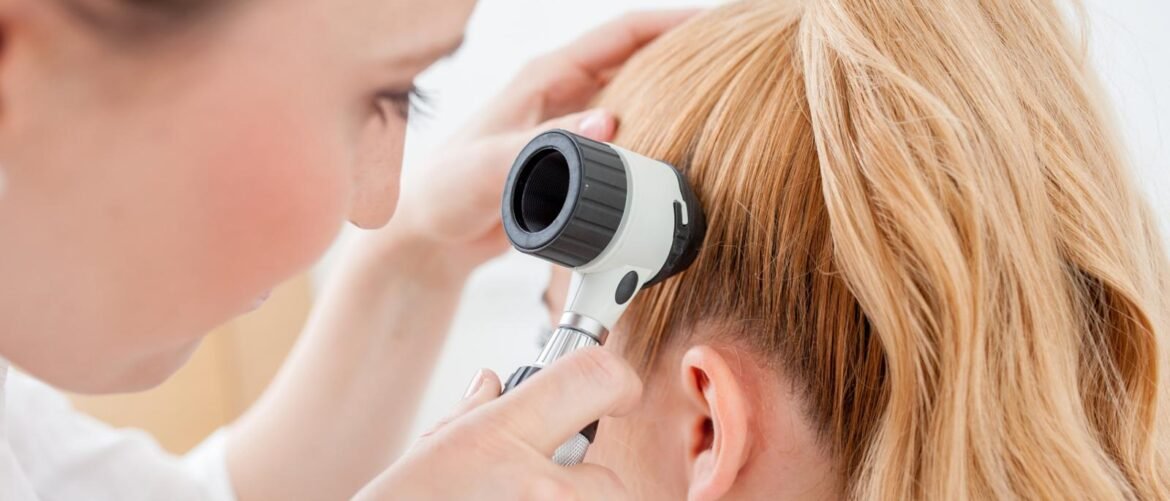
2. Trichoscopy: The Key Diagnostic Tool
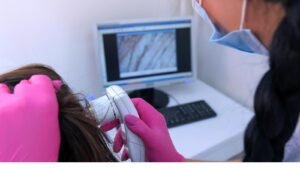
Trichoscopy is a non-invasive dermoscopic examination of the scalp and hair shafts.
It permits visualization of structures that cannot be reliably assessed with the naked eye, including:
- Hair-shaft diameter
- Hair-shaft morphology
- Follicular openings
- Hair density
- Follicular-unit composition
- Vellus hairs
- Perifollicular changes
- Yellow dots
- White dots
- Scalp vascular structures
- Hair-shaft abnormalities
Trichoscopy is particularly valuable because it allows the practitioner to examine the hair in its natural environment without having to remove large numbers of hairs.
What Does Anisotrichosis Look Like on Trichoscopy?
A patient with significant anisotrichosis may demonstrate a mixture of:
Thick terminal hairs + intermediate hairs + thin hairs + vellus hairs
The important finding is not simply the presence of a few thin hairs. It is the heterogeneity of hair calibre within the examined region.
In AGA, the frontal and vertex regions are generally more affected than the occipital region.
A useful examination therefore involves comparing:
Frontal/temporal region ↔ vertex ↔ occipital region
The occipital scalp can serve as a useful reference area because it is generally less susceptible to androgen-dependent miniaturization.
Quantifying Hair-Diameter Variability
Historically, a hair-diameter diversity greater than approximately 20% has frequently been used as a trichoscopic criterion for AGA, particularly in men.
However, this threshold should not be treated as an absolute diagnostic rule.
The literature demonstrates variation in the thresholds used between studies. Some contemporary reviews report approximately >20% in men and >10% in women as commonly used criteria. Clinical diagnosis should therefore integrate the degree of diameter variability with the patient’s history and other trichoscopic findings.
Other Trichoscopic Findings That Support AGA
Anisotrichosis should not be interpreted in isolation.
Other findings that may support androgenetic alopecia include:
Increased Vellus Hairs
A higher proportion of very fine, short, often hypopigmented hairs can reflect follicular miniaturization.
Increased Single-Hair Follicular Units
Miniaturization may be associated with a relative increase in follicular units containing only one visible hair.
Peripilar Sign
Perifollicular brownish or whitish discoloration may be observed in some patients and can provide additional diagnostic support.
Yellow Dots
Yellow dots represent follicular infundibula containing sebum and keratin and may be observed in AGA, although they are not specific to AGA.
Frontal Predominance
In AGA, trichoscopic abnormalities are often more prominent in the frontal and vertex regions than in the occipital scalp.
Differential Diagnosis: Do Not Assume Every Thin Hair Represents AGA
Anisotrichosis should be differentiated from other causes of hair-shaft abnormalities.
Hair-shaft disorders may be congenital or acquired and can involve abnormalities in the structure, diameter, shape, pigmentation, or strength of the shaft.
Examples include:
- Monilethrix – beaded hair with alternating thicker and constricted segments
- Pili torti – twisted hair shafts
- Trichorrhexis nodosa – focal areas of shaft damage and fracture
- Trichorrhexis invaginata – characteristic “bamboo hair”
- Pili annulati – alternating light and dark bands
- Woolly hair – tightly curled, fine hair
- Trichothiodystrophy – structurally abnormal hair that may demonstrate characteristic findings on polarized trichoscopy
These conditions have different pathophysiology and management strategies. Trichoscopy can provide important diagnostic clues for distinguishing these disorders.
Anisotrichosis Versus Hair Breakage
This distinction is essential.
Anisotrichosis associated with follicular miniaturization occurs because the follicle is producing hairs of different calibre.
Hair breakage, on the other hand, results from structural damage to the existing hair shaft.
Hair breakage may be associated with:
- Chemical processing
- Excessive heat
- Mechanical trauma
- Tight hairstyles
- Repeated brushing
- Environmental exposure
- Inherited hair-shaft disorders
A patient can have both processes simultaneously.
Therefore, the practitioner should determine whether the patient has:
Reduced hair production → follicular miniaturization
or
Increased shaft destruction → hair breakage
or both.
A careful history, examination and trichoscopy are essential for making this distinction.
How Is Anisotrichosis Treated?
There is no treatment for anisotrichosis itself because anisotrichosis is a finding.
Treatment must address the underlying cause.
When Anisotrichosis Is Associated With Androgenetic Alopecia
Management should focus on the underlying androgenetic alopecia and the preservation of miniaturizing follicles.
Depending on the individual patient, treatment options may include medically established therapies such as:
- Topical minoxidil
- Oral minoxidil in appropriately selected patients
- 5-alpha-reductase inhibition in appropriate patients
- Other physician-directed therapies based on sex, age, medical history, contraindications and treatment goals
Medical treatment should be selected and monitored by an appropriately qualified healthcare professional.
The goal is not simply to make the hair shaft appear thicker cosmetically. The objective is to preserve follicular function, slow miniaturization and maintain or improve hair density where possible.
When Hair-Shaft Damage Is the Primary Problem
If the examination indicates that the apparent variability is primarily related to hair-shaft damage rather than follicular miniaturization, management should focus on eliminating the source of injury.
Patients should be advised to:
- Reduce excessive heat exposure.
- Minimize repeated bleaching and chemical processing.
- Avoid excessive mechanical manipulation.
- Avoid hairstyles that place sustained tension on the hair.
- Use appropriate conditioning and hair-care practices.
- Handle wet hair gently.
- Avoid unnecessary brushing or traction.
These measures can reduce additional damage but cannot biologically restore a permanently damaged segment of an existing hair shaft. Hair-shaft disorders generally require supportive rather than curative management.
When Should a Patient Be Referred?
A patient should be referred for medical or dermatological evaluation when anisotrichosis is accompanied by:
- Progressive hair loss
- Rapidly worsening thinning
- Significant scalp inflammation
- Pain or burning
- Persistent scaling
- Follicular pustules
- Scarring
- Loss of follicular openings
- Extensive hair breakage
- Sudden onset of diffuse hair changes
- Suspected inherited hair-shaft disorder
- Signs suggesting systemic disease
Particular attention should be paid to loss of follicular openings, because this may suggest a scarring alopecia and warrants appropriate medical evaluation.
Monitoring Treatment Response
Trichoscopy is not only useful for diagnosis; it can also be used for longitudinal monitoring.
Standardized photographic and trichoscopic documentation can help evaluate:
- Hair-shaft diameter
- Number of miniaturized hairs
- Hair density
- Vellus-hair proportion
- Follicular-unit composition
- Scalp findings
For meaningful comparison, photographs and trichoscopic images should be obtained using consistent:
Magnification + scalp location + lighting + hair preparation + image positioning
This allows clinicians to compare the same scalp regions over time and assess whether follicular miniaturization is progressing or stabilizing.
Clinical Perspective
Anisotrichosis is a deceptively simple finding with considerable diagnostic value.
A practitioner looking only at overall hair density may conclude that a patient has “thinning hair.” A practitioner using trichoscopy can identify a more specific morphological process: heterogeneity in hair calibre resulting from follicular miniaturization.
This distinction is particularly important in early androgenetic alopecia, where the patient may not yet have obvious areas of reduced density.
The appropriate clinical approach is therefore:
History → Clinical examination → Trichoscopy → Differential diagnosis → Identify underlying cause → Appropriate treatment or referral → Objective monitoring
Key Clinical Points
Anisotrichosis = variation in hair-shaft diameter.
It is:
- A morphological finding, not a disease.
- A major trichoscopic feature of androgenetic alopecia.
- Associated with progressive follicular miniaturization.
- Best evaluated using Trichoscopy.
- Not diagnostic of AGA when considered alone.
- Different from simple hair-shaft breakage.
- Managed by treating the underlying cause, not the anisotrichosis itself.
For medical aesthetic and trichology practitioners, recognizing anisotrichosis is important because subtle changes in hair calibre may provide an early indication of follicular miniaturization and justify further assessment before clinically significant hair loss develops.
 Vancoderm Academy and College
At Vancoderm Academy and College, medical aesthetics education extends beyond the visible appearance of the skin and hair. Understanding the biology of the hair follicle, recognizing trichoscopic patterns and differentiating cosmetic hair damage from pathological hair loss are essential components of evidence-based hair and scalp assessment.
Early recognition, accurate assessment and appropriate referral are fundamental principles of responsible trichology practice.
Medical Disclaimer
This article is intended for educational purposes and does not constitute a diagnosis or individualized medical treatment recommendation. Anisotrichosis is a nonspecific morphological finding, and patients presenting with progressive hair loss, scalp abnormalities, significant hair breakage or suspected hair-shaft disorders should receive an appropriate clinical assessment by a qualified healthcare professional.